You're Just the Babysitter, Marcus — Part 1
Simone stood on the mat in sunglasses and told Marcus the kids needed their mother. He had been writing in that notebook for three years.
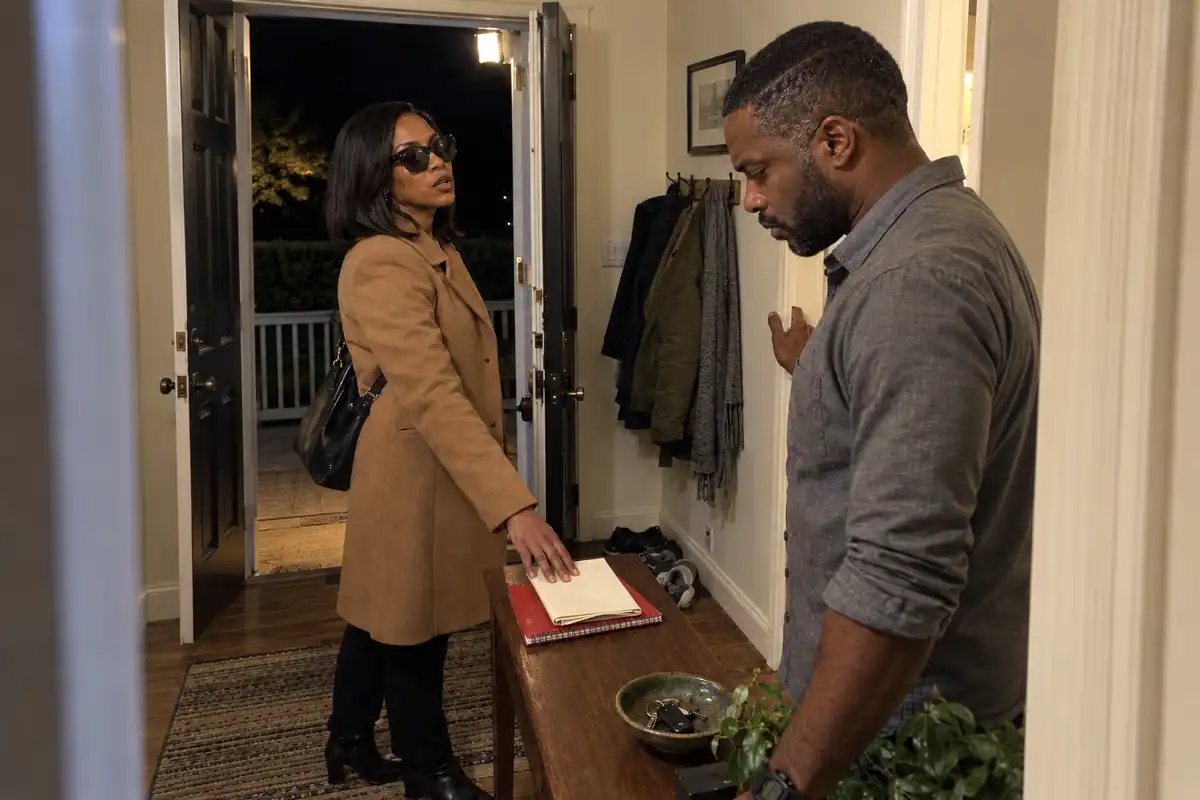
At 6:58 on the second Thursday in February, Marcus Bell was writing in a notebook when someone knocked.
He finished the line before he got up.
A date, a time, and eleven words.
Then he capped the pen and laid it on the hall table, next to the bowl where the keys went.
Simone was standing on the mat.
She had not walked up that path in three years.
She did not come past the mat now.
“It’s cold,” she said.
“It is.”
“Marcus.”
He stepped back, and she came in about two feet and stopped, the way people stop inside a waiting room.
She kept her sunglasses on.
It was dark out.
“Where are they?”
“Des is at the table doing his math. Nia’s upstairs.”
“The baby’s doing math.” She said it like a joke she had heard somewhere. “He’s five.”
“He’s six.”
“Right.”
She looked past him, at the stairs, then at the coats on the hooks.
She did not take off the sunglasses.
From the kitchen came the sound of a marker squeaking on paper.
Simone took a folded packet out of her bag and held it out.
“I had somebody draw this up.”
He didn’t take it.
“You sign that,” she said, “and we don’t have to do March fourth.”
“March fourth is mediation.”
“March fourth is a whole day off work for both of us.”
He looked at the packet.
He had gotten the letter about March fourth on Monday and read it four times at the depot, standing up, with his lunch getting cold.
“What’s in it?”
“Primary residence with me. Every other weekend with you, and half the summer.”
“Full custody.”
“Primary.” She shifted her weight. “There’s a difference.”
“What’s the difference?”
She let out a breath through her nose.
“It’s not about you, Marcus.”
At 7:00 the watch on his wrist beeped, the way it had beeped on the hour for eleven years.
Simone almost smiled.
“That thing still works.”
“It does.”
“You could buy a new one.”
“I could.”
She put the packet down on the hall table, on top of the notebook, and left her fingers on it a second, like that settled something.
“Look,” she said. “Greg’s place has a yard and a good school.”
“Okay.”
“There’s a woman in the house.”
“There’s a man in this one.”
“That’s not the same and you know it.”
“Tell me how it’s not.”
“Because I’m their mother.”
“You were their mother when you were here, too.”
She looked at the ceiling for a second.
“It’s not about you, Marcus.”
That was the second time she had said it, and it had gotten smaller.
She took the sunglasses off then, finally, and she looked tired underneath, and for about a second he thought they were going to have a real conversation.
“Kids need their mother,” she said.
She said it the way people say the weather’s supposed to turn.
“You’re just the babysitter.”
The marker kept squeaking in the kitchen.
Marcus looked at the packet on the notebook.
Then at the bowl where the keys went.
Three years.
Six hundred breakfasts.
A night shift he gave up so he could be in the pickup line at four.
The differential came to two dollars and forty cents an hour.
He had done that math one time and never done it again.
He had always assumed a sentence like that would land harder than it did.
“Okay,” he said.
She blinked. “Okay?”
“Okay, I heard you.”
“So you’ll sign it.”
“No.”
Her phone lit up in her hand and her whole face changed, the way a room changes when somebody opens a curtain.
“Hey,” she said into it, bright. “No, I’m just finishing something.”
She held up two fingers at him and stepped back onto the mat.
Marcus picked the packet up off the notebook and held it out to her.
She took it without looking at what she was taking.
On her way down the steps she glanced back at the hall table.
“You still make your lists,” she said.
“Something like that.”
Then she was gone, and the porch light was on nothing.
Desmond came around the corner with a marker still in his fist.
“Dad. Your watch went off.”
“It did.”
“That watch is older than dinosaurs.”
“Dinosaurs didn’t have watches, Des.”
“That’s what I said.”
He sent him back to the table and stood in the hallway another minute.
Nia was sitting on the fourth stair with her arms around her knees.
She had her school hoodie on over her pajamas.
“Was that Mom?”
“Yeah.”
“Is she coming Saturday?”
He opened his mouth to guess.
He had been guessing on this exact stair since she was six years old.
“I don’t know yet,” he said. “I’ll find out, and then I’ll tell you.”
Nia thought about that.
“Okay,” she said, and went up.
The notebook was Nia’s doing, in a way.
She had been six, and every Friday she asked the same question, and every Friday he answered it with his best guess.
He had said yes too many times.
Then he had watched her sit on the porch step in her good jacket until the streetlights came on.
So he quit guessing.
He started writing down what Simone actually said on the phone, and then, underneath it, what actually happened.
Dates. Times. Whether anybody picked up.
And one more line at the bottom of every entry.
The first one was still in there, near the front, in pen that had gone brown at the edges.
March 9. 10:00 a.m.
Did not come. No call by 2:00.
Told Nia: Mom’s shift ran long. She loves you.
That was the whole system.
A man standing in a hallway, deciding what a six-year-old was going to carry.
He had never shown it to anybody.
It lived on the hall table, next to the bowl, and Simone had walked past it a dozen times in three years and taken it for a grocery list.
Rochelle let herself in at eight with a foil pan and her coat still buttoned.
“Nia texted me.”
“Nia’s nine.”
“Nia’s nine and she texts me.” She put the pan on the stove. “What did that woman want?”
He told her.
Rochelle turned the oven on and did not say anything for a while, which for Rochelle was a long time.
“She said what?”
“She said the kids need their mother.”
“And?”
“And I’m the babysitter.”
Rochelle set the oven mitt down harder than she needed to.
“A babysitter gets to go home,” she said.
She sat down at the table across from Desmond and took a marker and started coloring a corner of his paper, the way she did when she was thinking.
“When’s the thing downtown?”
“March fourth. Nine thirty. Eleventh floor.”
“Who’s the mediator?”
“Man named Whitmore.”
Rochelle’s hand stopped. “Whitmore. That’s the same one from before.”
“Same one.”
“Huh.”
“I called the office Tuesday to check the time,” Marcus said. “He got on the phone. He asked how Nia and Desmond were doing.”
“He remembered their names?”
“He remembered their names.”
Rochelle colored another corner.
“They ask you to bring anything?”
“Any documentation of the parenting schedule as it currently occurs.”
“You got any of that?”
Marcus looked out at the hall table.
“Some,” he said.
Rochelle watched him look.
“Marcus.”
“It’s not for that,” he said. “I never wrote it for that.”
“I didn’t ask what you wrote it for.”
She put the marker down and capped it.
“I asked if you were bringing it.”
After Rochelle left and the dishes were done and both kids were down, he sat on the third stair and opened the notebook on his knee.
He wrote the date.
He wrote the time.
February 12. 6:58 p.m.
S. came to the house. Did not stay.
Asked me to sign a paper. I did not sign it.
Told Nia: your mother wants more time with you. She loves you.
He read it twice.
Then he closed it, and put it back on the hall table, next to the bowl where the keys went.
At 9:40 that night, twenty-six minutes east, Simone Bell drove with the phone on speaker in the cup holder.
She had timed that drive once herself, years ago, for a different reason.
“Did you talk to him?” Pauline said.
“I talked to him.”
“And?”
“He needs time. He’s like that.”
“He’s had three years, sugar.”
Simone changed lanes.
“He’ll come around,” she said. “He always does the right thing eventually.”
Pauline made a warm sound.
“Greg’s already got the blue room picked out. Two beds in there.”
“She’ll need her own.”
“Then she’ll have her own.” A pause. “What grade is she in now?”
“Third.”
Nia had finished third grade in June.
“Oh, third’s the sweet one,” Pauline said. “You’re going to love the school shopping.”
“I can’t wait.”
They talked another few minutes about the yard and the church and whether the little boy liked dogs, and Simone said yes, he loved dogs.
Desmond had never been near a dog in his life.
She said goodnight and hung up and drove the last eight miles with the radio off.
She had told those people a great many things.
She had not yet decided which ones she was going to have to make true.
The story continues in Part 2.