The Paper She Slid Across the Table — Part 1
Tuesday, a little after 10:00, in a lawyer's conference room. Beverly Hartwell's daughter slides one notarized page across and won't meet her eyes.
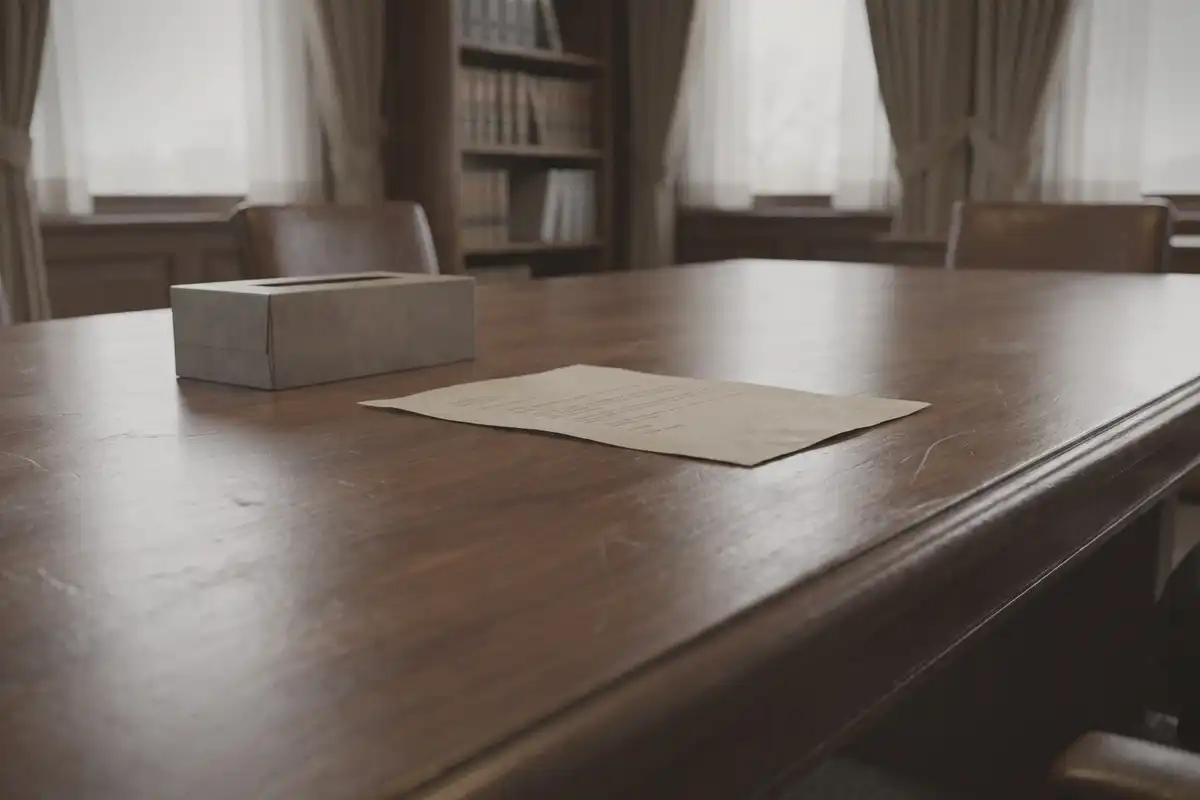
My daughter slid a single sheet of paper across the lawyer’s table, and she didn’t look at me when she did it.
It was Tuesday, April 21, a little after 10:00 in the morning. We were sitting in Mr. Ingram’s conference room, up on the second floor of the old bank building in Millbrook, Ohio.
There was a box of tissues in the middle of the table. My husband, Gerald, had been gone two months.
Heather tapped the paper with one fingernail. She’s my oldest, 41 years old. She had on a navy blazer I didn’t recognize, and she sounded like she had practiced in the car.
She said, “Daddy changed his mind, Mom. It’s notarized. It’s done.”
My son, Scott, nodded along beside her. He didn’t look at me either.
I picked up the paper. It said my husband was giving Heather our cabin on Clover Lake. There was his name, signed big and steady.
There was a notary’s stamp. And there was a date. February 15.
I knew exactly where Gerald was that day, because I was sitting beside him. He had a breathing tube down his throat, and he hadn’t opened his eyes in eight days.
I didn’t say that. Not yet.
My daughter had forgotten something. Her father never owned that cabin by himself.
I was the trustee. And in my purse, in an envelope with my name on the front, were the last words Gerald ever sent me, with his real signature at the bottom.
I said one word. “No.”
My name is Beverly Hartwell. I’m 67 years old, and for thirty-eight years I was an escrow officer at Millbrook Title Company.
If you have ever bought a house, you have sat across a table from somebody like me, the woman in the cardigan saying, “Sign here, initial here.” People thought I was a clerk. What I really did was hold everything, the buyer’s money, the seller’s deed, the bank’s papers.
Nobody got paid and nobody got keys until every signature was right.
That’s what escrow is. It’s a waiting room for money, and I was the one who decided when the waiting was over.
My first boss was an old title man who had been closing houses since before I was born. The first week I worked for him, in 1985, he handed me a deed and asked me what was wrong with it.
I looked it over for half an hour and couldn’t find a thing. He tapped the signature. The man who signed it had been dead for three weeks.
Then my boss leaned back in his chair. “Beverly, a signature is only as honest as the hand that held the pen.”
In thirty-eight years, I caught a good many dishonest hands. A son who signed his mother’s name while she was in a nursing home.
A husband who tried to sell the house while his wife was at work. After a while, you look at a signature the way a mechanic listens to an engine.
I had a saying of my own, and I said it so often that when I retired, in March of 2023, the girls in the office had it printed on a coffee mug for me. Nothing closes until the paperwork is clean.
Gerald teased me with it for decades. If I took too long choosing a paint color, he’d lean in the doorway and say, “Paperwork clean yet, Bev?”
Gerald taught shop at Millbrook High School for thirty-four years. He was big and loud and warm, the kind of man who knew the name of every waitress in the county.
I was the quiet one. At parties, people talked to Gerald. They talked around me.
After he passed, my children started handling me. “Mom, don’t worry about the paperwork.”
I once heard Heather tell a friend that I used to “push paper for a living.” I let it go.
In the summer of 1997, Gerald and I bought a little two-bedroom cabin on Clover Lake, about an hour north of Millbrook. It cost $61,000, and we took out a fifteen-year mortgage to get it.
It had peeling green shutters, a leaky roof, a rickety old dock, and a view that made you forgive all three. Heather was 12 that first summer. Scott was nine.
Gerald built a porch the next year, and then he pulled out the old dock and built a new one. Both our children learned to dive off that dock.
Years later, he taught our granddaughter, Avery, to fish from it. Each year, on the Saturday of Memorial Day weekend, the whole family came up to put the dock in the water, and each October we pulled it out again.
In 2012 we made the last payment on the cabin. Gerald retired that same year. And that November, we sat down in Mr. Ingram’s office and signed the Hartwell Family Trust.
Gerald and I made the trust together. We both signed it, and we were both the trustees, which means the people in charge of it. We put the cabin into it.
While we were both alive, we could change the trust, but only one way. In writing, signed by both of us, and delivered to the trustee.
Mr. Ingram put the word “only” in there on purpose, because I asked him to. I had seen too many families pulled apart by a piece of paper somebody found in a drawer.
The trust said something else, too. When the first of us died, the cabin could never be changed again. The one left behind would run it alone, as trustee.
Nobody could sell it or borrow against it. The whole family could use it.
And when our youngest grandchild turned 25, the cabin would go to all of the grandchildren, in equal shares. Gerald even set money aside in the trust to pay the taxes and fix the roof.
Gerald put it best. “It’s the one thing we ever built that nobody can spend.”
That Thanksgiving, we explained it all to the kids at the kitchen table. Scott asked two questions. Heather was looking at her phone.
After that, nobody mentioned the trust again for thirteen years. Gerald paid the cabin taxes out of the trust account.
Gerald opened the mail. Gerald climbed up and patched the roof.
To everybody in the family, it was Dad’s cabin. I never corrected anybody, because it didn’t seem to matter whose name was on the paper, as long as we were all at the lake together.
That was my mistake. I let silence carry a message that needed words.
This past February, Gerald caught pneumonia. He was 70 years old, and he had never spent a night in a hospital in his life.
On Monday, February 2, I drove him to the regional hospital, forty minutes from Millbrook. He was there seventeen days.
I kept a green spiral notebook the whole time, the same kind I kept for every closing. When the doctor came, what she said, who visited, and how long they stayed.
For the first five days, Gerald was himself, just tired. His night nurse was a woman named Edna, a nurse for more than thirty years, with a voice like a porch swing. Four nights running, he told her about the lake.
On Friday, February 6, the doctor told us that if his oxygen kept dropping, they might need to put him on a breathing machine. That evening, Gerald made me go home at 8:00 to get some sleep.
I didn’t want to. He insisted. “Go on, Bev. I’ll still be ugly in the morning.”
The hospital called me at 6:45 the next morning. By the time I got there, they had moved him to the intensive care unit and put the tube in.
They kept him deeply sedated, so his body could rest. He never woke up again. He passed away before dawn on Thursday, February 19, twelve days later.
The hospital called me in time, and my hand was on his.
That morning, Edna came up from her floor and found me in the family waiting room. She handed me a sealed envelope. On the front, in her handwriting, it said “Bev.”
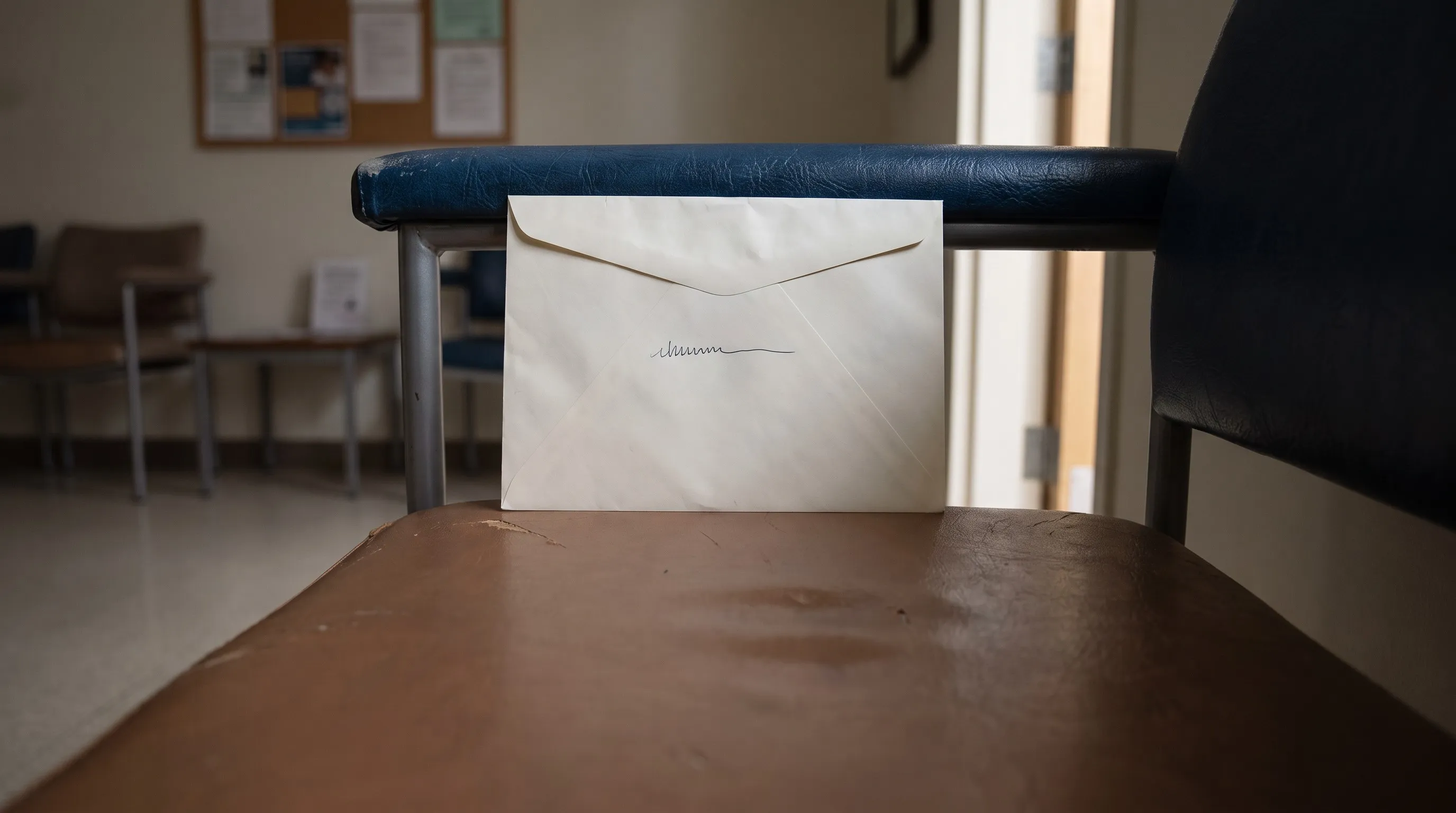
She told me that on that Friday night, after I had gone home, Gerald had asked her to write something down for him. His hands were shaking too hard to hold a pen for long.
She wrote while he talked. It took about forty minutes, because he kept stopping to catch his breath.
When she was done, he looked it over and signed it at the bottom, right in front of her, at 9:40 at night. Then she signed her own name under his, with the date and the time.
He asked her to keep it for me and to give it to me only if he didn’t come off the machine. He told her, “If she gets it tonight, she’ll worry till morning.”
I opened it in my car, in the parking garage, and I didn’t drive home for an hour.
On that Friday night, before Edna ever picked up the pen, our daughter had come to see her father. She had asked him to give her the cabin. And he had told her no.
I didn’t show the letter to anybody. Part of it was private, between a husband and his wife.
And the part about Heather, I didn’t want to hold over her while we were still burying her father. I told myself the meeting at Mr. Ingram’s office would settle the cabin, and nobody would ever need to know she had asked.
So I carried that envelope in my purse for two months, and I kept my mouth shut. That was my second mistake.
Heather was her daddy’s girl from the day she was born. She had his laugh and his charm, and she could talk anybody into anything. The first summer at the lake, when she was 12, Gerald told her on the old dock, as a joke, “Someday all this is going to be yours, princess.”
She never forgot that joke. I’m not sure she ever understood it was one.
She married young, had Avery at 21, and divorced in 2021. After that, she put everything she had into a clothing boutique on the square.
It closed in 2024. She took a job at the front desk of a dental office and told nobody but her brother how bad things were, and not even him all of it.
By this year, she owed more than $60,000 on credit cards and a business loan, and she was behind on her house payments. Heather would rather drown than let Millbrook see her swim badly.
In June of 2023, Gerald wrote her a check for $15,000. On the memo line he wrote, “Loan. Pay back when you can.” She never paid back a dime, and he never asked.
Scott is three years younger than his sister, and he has spent thirty-eight years following her. When they were little, she made the rules, and he kept them. He’s a good man.
He fixes furnaces and air conditioners, two hours away, and he has a sweet wife and two boys, nine and six. But Scott would rather agree with his sister than argue with her, and he always has.
Then there’s Avery, Heather’s girl. She’s 19, in her second year at the state university, and she’s the nearest thing to Gerald I have left. She caught her first fish off that dock when she was five, and she screamed so loud that a man across the lake called the cabin to ask if everybody was all right.
And there’s Tamara Yates. Tamara was Heather’s best friend from the time they were 14. She spent whole summers at our cabin.
I must have fed that girl a hundred hot dogs. When she grew up, she became a notary public, and she did loan signings on the side.
For a few years, I hired her myself. When she worked my closings, I made her keep a notary journal, with each signature, each date, and each identification she checked.
Then, in 2016, she notarized a wife’s signature when the wife wasn’t even in the room. The husband had signed for her. I caught it before anything closed, had the papers done over, and never sent Tamara another job.
I never reported her. I never told Heather why I stopped using her, either. I’ve thought about both of those a great deal this year.