The Paper She Slid Across the Table — Part 2
"Daddy changed his mind, Mom." Heather already has a buyer for the lake cabin. Beverly says one word, then starts checking dates, the way she always has.
On the morning of the meeting, I put on the blue sweater Gerald always liked, and I checked my purse twice.
My glasses. My car keys. The envelope.
People call it a will reading, but it isn’t like the movies. Nobody sits in a dark library while an old man in a vest announces who gets the silver. The lawyer sits the family down and walks everybody through the will and the trust at the same time, so nobody can say later that they heard it different.
Gerald’s will was a short one. Mr. Ingram called it a pour-over will.
Whatever Gerald owned in his own name, his truck, his tools, a little savings account, poured into the trust. Everything that mattered was already there.
I wasn’t nervous. I thought it would be a sad morning and a simple one. I never imagined my daughter had brought a paper of her own.
Scott met me in the parking lot. He had driven two hours that morning, and he hugged me hard and smelled like coffee and furnace dust.
Heather came in a few minutes late, which is early for Heather. She had a big manila envelope under her arm, and she was wearing that navy blazer.
Mr. Ingram’s office sits over what used to be the bank lobby, and the floors creak. He is a careful man. He has been our lawyer since 2012, and in all that time I have never once heard him promise anybody anything.
He shook hands with all three of us, and before anything else, he said, “I want to be clear about one thing. I represent Beverly, as trustee of the trust and executor of the will. I can’t give advice to Heather or Scott. You’re both welcome to have your own lawyer look at anything I show you today.”
Heather smiled at him like he was being cute.
He went through the will first, and then the trust, slowly, page by page.
The house and our savings stay in the trust for me for the rest of my life, and I can change my part of it if I ever want to. When I’m gone, whatever is left gets split evenly between Heather and Scott. Then he came to the cabin.
He slowed down and turned the page. “The cabin on Clover Lake is held in trust for the grandchildren. Under the terms Gerald and Beverly signed, it can’t be sold or borrowed against. The family may use it. When the youngest grandchild turns 25, it passes to all the grandchildren in equal shares. Beverly is now the sole trustee.”
Heather sat up straight. “Wait. Since when is Mom the trustee?”
Mr. Ingram looked at her over his glasses. “Since November of 2012. I believe the family was told at the time.”
Heather laughed. It was a short, bright laugh, the one she puts on at the dental office.
“Mom does paperwork. Daddy made the decisions.” And Scott laughed too, just a little, the way he always does when his sister laughs.
Then Heather opened the manila envelope, took out one sheet of paper, and slid it across the table to me.
She said, “Daddy changed his mind, Mom. It’s notarized. It’s done.”
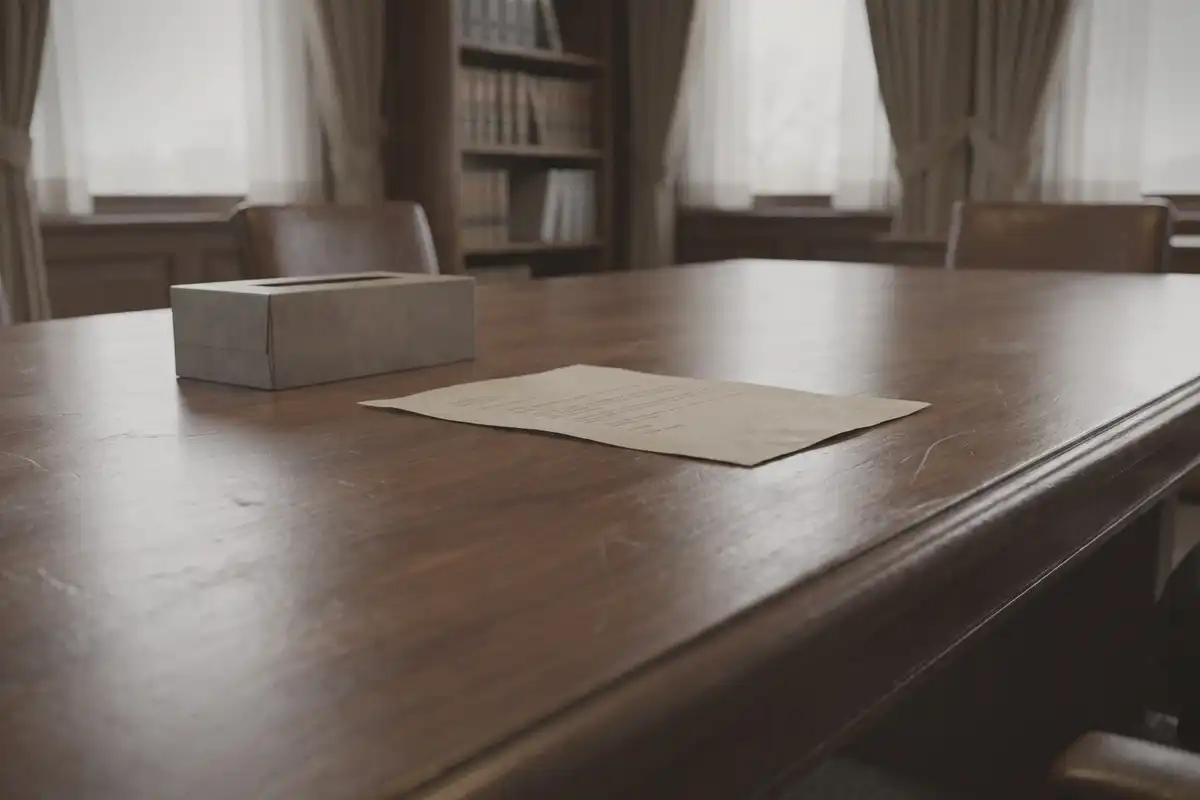
I want you to picture that table. Walnut, long enough for twelve. My daughter’s fingernail on the paper, tapping.
My son beside her, looking out the window. And me across from her, in my husband’s favorite sweater, suddenly the only person in the room who could see the whole file.
The paper was one page, typed. It said, “I, Gerald Hartwell, amend my trust. Upon my death, the cabin on Clover Lake shall go to my daughter, Heather, to keep or sell as she sees fit.”
Under that was a signature. Under the signature was the notary’s paragraph, the little block of words that says the person came before the notary and signed.
The date on it was February 15, 2026. And the stamp said Tamara Yates, Notary Public, State of Ohio.
Scott finally spoke up. “It’s Dad’s signature, Mom. I’d know it anywhere. And Tamara’s a real notary. Just let Heather have it.”
Heather jumped in right behind him. “He signed it at the hospital. Tamara notarized it. I didn’t want to spring it on you, but you’ve been so, I don’t know, foggy since the funeral.”
Foggy. I had just followed every clause of that trust without blinking.
Mr. Ingram held out his hand for the paper, and I passed it to him. He looked at it for a long while. Then he said, “I’ll need to review this against the trust, and I’ll write to everyone. I’m not going to give an opinion on a document I’ve had for two minutes.”
Heather shook her head. “There’s nothing to review. I already have a buyer.”
That was the first I heard about a buyer.
I could see two roads from where I sat.
I could have said it out loud. February 15. I could have told my children where their father was that day, and what he looked like, and how long he had been asleep.
I could have taken the envelope out of my purse and laid it on the table.
But I have sat at a lot of closing tables. And here’s what they taught me. When a signature is bad, you don’t argue with the person across the table.
You don’t explain what you’ve noticed. You stop the closing, and you pull the file.
The moment you tell someone which part of the lie you’ve spotted, they go home and fix that part. If I brought up the date, Heather would have a new date by suppertime, and a new story to go with it.
So I didn’t argue. I didn’t explain.
I looked my daughter in the eye and said one word. “No.”
The room went quiet. Heather stared at me. “What do you mean, no?”
“I’m the trustee, and I don’t accept this paper.” Then I turned to Mr. Ingram. “Would you please make copies for everyone, and note in your file that the trustee rejected it today?”
Mr. Ingram nodded and wrote it down.
Heather went red from the collar up. “You can’t just say no to Daddy.”
“I’m not saying no to your father, honey. I’m saying no to this paper.”
Heather took the paper back the second the copies were made. “We’ll see what a judge thinks.” Then she walked out.
Scott stood there a moment, looking at me like I was somebody he’d just met, and then he followed her. Over his shoulder, he said, “Mom, just think about it.”
Mr. Ingram shut his door and sat down across from me. “Beverly, you saw something on that page.”
“The date. He was on the ventilator that day. He had been for eight days.”
He didn’t promise me a thing. “Call me in the morning, and we’ll get the hospital chart started. You’re the executor, so you have the right to ask for it.”
I drove home. I held together all the way to my driveway, and then I sat in the car with the engine off and cried until my hands stopped shaking. Then I went inside and got out the green notebook.
Sunday, February 15. In my own handwriting. “Sedated all day. No response. Heather came 2:10. Left 2:30.”
Twenty minutes. My daughter had visited her dying father for twenty minutes. Now she had built a lie on top of those twenty minutes, and a friend had stamped it.
Scott called that night. “Mom, she’s drowning. You don’t know how bad it is.”
“Then tell me.”
“That’s her business. But Dad wanted to help her. It’s notarized. Why are you fighting him?”
I had one question for him. “Scott, were you in the room when your father signed it?”
“No. But Tamara was.”
“Good night, son.” Then I wrote it in the notebook.
Tuesday, April 21. Scott says Tamara was in the room.
The next morning, Wednesday, I was at the bank on the square when the doors opened at 9:00. Gerald and I had kept a safe deposit box there for years. The original trust was in it.
I put Gerald’s letter in beside it. From then on, I carried a copy.
At 9:30 I called Mr. Ingram. He sent the hospital a request for Gerald’s complete chart, certified, in my name as executor.
And I signed a short letter he drafted for me, as trustee. It stated that no amendment had been delivered to me while Gerald was alive, and that I rejected the paper Heather had brought.
That was my first letter as trustee. It wasn’t dramatic. Paperwork rarely is.
But it put that no in writing, with my signature and a date on it, and that’s where every true thing I’ve ever proved has started.
On Thursday, after she got off work, I asked Heather to come by for coffee. Just the two of us, at my kitchen table, the same table where we had explained the trust in 2012.
I poured us each a cup and sat down across from her. “Heather, if you’re in trouble, tell me. We’ll sit down with somebody who knows how to untangle debt, and we’ll look at it together. But I need the truth about that paper.”
She stirred her coffee. “The truth is Daddy always wanted me to have the cabin. He told me when I was 12.”
“He told you that as a joke, honey.”
“He told me again in February.”
I set my cup down. “Did he?”
She looked me straight in the eye. “Yes.”
She didn’t mention her house. She didn’t mention the buyer. At the door she kissed my cheek, the way she used to when she left for school, and she drove away.
I stood at the window a long time after her taillights were gone.
The next Tuesday morning, my phone rang, and it was Nora.
Nora runs the escrow desk at Millbrook Title now. I trained her in 2008, and she still checks everything three times.
She got right to it. “Bev, I’m calling you officially, and I hate it.”
Heather had come in on Monday with a signed contract from a cash buyer for the Clover Lake cabin. The closing was set for Friday, May 29. Heather had told the front desk the cabin was hers by a trust amendment, and she had left a copy.
Then Nora got to the part she hated. “The county shows the owner as the Hartwell Family Trust, with you as trustee. My underwriter won’t insure a thing without a deed signed by the trustee and a certification of trust. I have to ask. Are you signing?”
“The trustee won’t be signing anything.”
She was quiet a second. Then she said, “I figured. You’re the one who taught me that a signature is only as honest as the hand that held the pen.”
I told her to expect a letter from Mr. Ingram.
That night I did something I had done 10,000 times for strangers and never once for my own family. I went to the county clerk of courts website, where anybody can look up a court case, and I typed in my daughter’s name.
There it was. A foreclosure case, filed by her mortgage company the September before. And a sheriff’s sale of her house, set for Thursday, June 11.
Now I understood the hurry. Sell the cabin on May 29. Stop the sheriff on June 11.
My daughter had a clock ticking, and she had decided her father’s cabin was the only way to stop it.
My first feeling wasn’t anger. It was grief. She had sat at my table that Thursday and let me pour her coffee, and she hadn’t breathed one word.
On Wednesday, Mr. Ingram’s letters went out to Heather and to Nora, plain and short. The trust could be amended only by a writing signed by both Gerald and me and delivered to the trustee.
The paper Heather had brought did not meet those terms. The trustee had declined it. The cabin remained trust property.
Heather texted me an hour after hers arrived. “Your lawyer can say whatever you pay him to say.”
That Saturday, she came to my house, and she brought Scott.