The Paper She Slid Across the Table — Part 4
Who stamped that page, and when? At the picnic table by the lake, Beverly asks her daughter one last question, then turns to the friend with the seal.
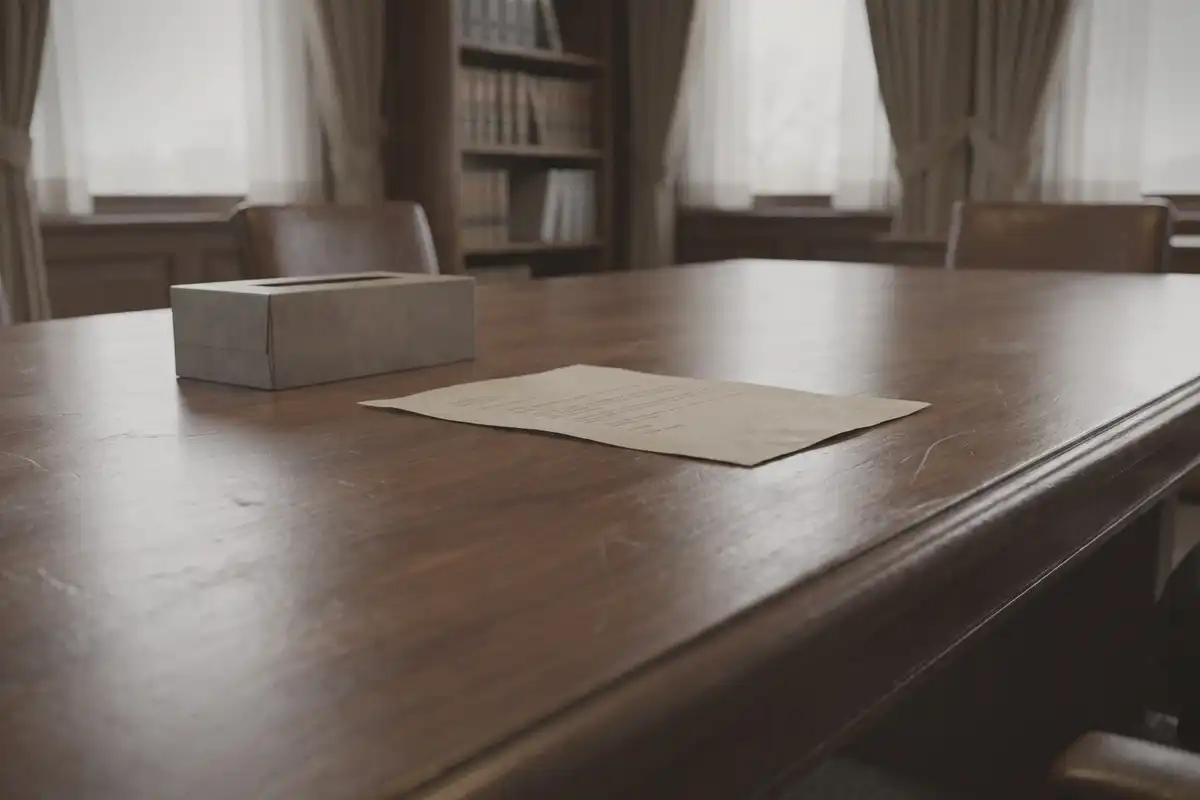
Heather’s chin came up. “They woke him up sometimes. You know they did.”
I shook my head. “Not that day. Not one day after the 7th. It’s written down every hour.”
Then I laid down the last two copies, one on top of the other, and held them up against the sky over the lake. “This is the check your father wrote you in June of 2023. Look at the G. His pen skipped. Now look at your paper. It skips in exactly the same place. Nobody signs his name the same way twice. That signature was traced.”
Scott reached over and took the two sheets out of my hands. He held them up to the light himself. I watched his face change.
Then I turned to Tamara.
I leaned across the picnic table. “Tamara, when you worked my closings, I made you keep a journal. The signing companies you work for now make you keep one too. Is there an entry in your journal for February 15?”
She didn’t answer.
I waited a moment. “You should know that twelve days ago, I filed a complaint with the Ohio Secretary of State about that stamp.”
Tamara’s face just folded up. “Mrs. Hartwell, can’t you take it back?”
“No. I can’t take back the truth. But I can tell them you told it.”
And she did, right there at that picnic table. There was no entry, she said, because she never went to the hospital. The second week of April, Heather had brought the paper to her kitchen table, already signed.
Heather told her Gerald had signed it at the hospital and they had just never gotten it stamped. She asked Tamara to date it for the Sunday she had visited, because the hospital would show she was there that day.
She told Tamara she couldn’t pick the Friday night she had gone to see him. A nurse had been in and out the whole time she was asking him, and she was afraid somebody had heard him say no.
Tamara said, “I knew better. I did it anyway. I didn’t even charge her. I thought I was being a friend.”
Heather spun toward her. “Tamara!”
Then Heather did what I knew she would do. She turned it around. She stood up.
“You’re all ganging up on me! I’m about to lose my house, and you’re sitting on a cabin nobody even uses half the year! Daddy would have helped me!” And then one more time, loud enough to carry across the water, “Daddy changed his mind, Mom. It’s notarized. It’s done.”
“Your father didn’t change his mind, Heather. I know exactly what was on his mind that week, because he told me.”
I took the letter out of my folder. “This is a copy too. The original is in the bank. I don’t really need the paper. I know every word.”
Edna stood up beside me. She said, “I’m the one who wrote it down. Friday night, February 6. I told him nurses aren’t allowed to witness wills. He said, it isn’t a will, honey, it’s a letter to my wife. He looked it over and signed it in front of me at 9:40. At 7:00 the next morning, they put the tube in. He never woke up again.”
Then I unfolded it, and I gave them his words.
“Bev. Edna is writing this down for me because my hands won’t hold still. If the spelling is good, you’ll know it isn’t mine.”
“The doctor says if my oxygen keeps dropping, they’ll put me on the machine. I’m not scared of that. I’m scared of you sitting up all night in that chair. So Edna is going to keep this until you need it.”
“Heather came by tonight after you left. She’s in deeper than she’s told us. She asked me to give her the cabin now, so she could sell it. I told her no. I said it kindly, and I meant it.”
“The cabin stays in the trust for Avery and the boys, the way you and I signed it at Ingram’s. It’s the one thing we ever built that nobody can spend. You’re the trustee. Don’t let anybody hurry you. You always told me nothing closes until the paperwork is clean. Hold them to it. Hold me to it.”
“Tell Heather I love her, and the answer is still no. That’s love too. Tell Scott he doesn’t have to carry his sister’s water anymore. He never did.”
“The canoe in the shed needs sanding, three coats of varnish, and two seats. Your hands are steadier than mine ever were. Finish it, and take it out at sunrise. You’ve slept through the best part of that lake for twenty-nine summers.”
“I love you, Bev. Forty-four years, and it wasn’t near enough. Gerald.”
Nobody said anything. Out on the lake, somebody’s outboard motor coughed and caught.
Avery was crying without making a sound. Edna had her hand on my shoulder.
Scott laid the two copies down on the table, very carefully, like they might break. “He had that written down the same night she asked him?”
I nodded. “Within the hour.”
Scott looked at his sister. “No, Heather.”
Just that. Then again, stronger. “No. I’m done carrying it.”
And he turned to me. “Mom, I never even looked at the date. I didn’t want to. I’m sorry.”
Heather didn’t say she was sorry. She looked around that table like we were strangers at a bus stop. “So that’s it. You’d rather watch me lose everything.”
“No, honey. I’d rather you lose a house than lose yourself. You can come back from one of those.”
Then I told her the rest.
I said, “The cabin stays in the trust, for Avery and the boys, the way your father and I signed it. And on Tuesday morning, I’m taking copies of everything to the Millbrook police. Monday is Memorial Day, so it’ll be Tuesday at 9:00.”
Heather stared at me. “You’d call the police on your own daughter?”
“I’m not doing it to punish you. I’m doing it because a forged paper with a state stamp on it doesn’t stay inside a family. If I bury it, I become the second person in this family to lie about your father’s signature. I kept quiet about Tamara’s stamp once, in 2016, and look where that got us. The next bad stamp could land on some widow who doesn’t know what a notary journal is. And I spent thirty-eight years refusing to let a bad signature through. I’m not going to start with my own child’s.”
I wasn’t done yet. “What happens after that isn’t up to me. It’s up to a prosecutor and a judge, and that’s how it ought to be. But if you want to go in first and tell it yourself, I’ll drive you. I’ll be in your driveway at 8:30 on Tuesday morning.”
Heather picked up her folder. “Don’t bother.” And she walked down the porch steps to Tamara’s car.
Tamara stopped at the top of the steps. She said, “I’m sorry, Mrs. Hartwell.”
I met her eyes. “I believe you. Tell them the same thing you told me.”
After they drove off, nobody said much for a while. Then Scott stood up and pulled on his waders. Avery went and got the drill.
Edna cut the pie and told us all what we were doing wrong. By 1:00 that afternoon, the dock was in the water, the same as every year, and I sat on the porch Gerald built and watched the light on it.
So let me square the ledger, the way I would at the end of any closing.
First, the cabin. It’s still in the trust, for Avery and the boys, and not one board of it was sold.
On Tuesday morning at 8:30, I was in Heather’s driveway. The curtains never moved. I waited ten minutes.
Then I drove to the Millbrook police station, and Mr. Ingram met me on the steps. A detective sat with us for an hour and took my copies and my statement.
He didn’t promise me anything either. I’ve come to trust people who don’t.
In August, the county prosecutor charged Heather with forgery. Her next court date is in October. Avery tells me her mother’s lawyer, a public defender, has said the prosecutor may offer a diversion program, since it’s a first offense and nobody lost any money.
I don’t know how it will come out. I haven’t asked anybody to go hard on her, and I haven’t asked anybody to go easy.
I told the truth and handed over copies. That’s all a person ought to do.
Heather’s house sold at sheriff’s sale on June 11. I didn’t save it. I offered to go with her to a nonprofit credit counselor, and that offer still stands.
She hasn’t taken it. She rents a two-bedroom apartment now, so Avery still has a room, and she still works at the dental office. She never filed a thing in probate court.
She got nothing early, and she won’t. I had Mr. Ingram add one line to my own part of the trust.
The $15,000 her father lent her comes off the top of her half someday. That’s only fair to Scott.
She hasn’t said she’s sorry. But on the evening of August 23, she sent me a text with two words in it. “It floats.”
I wrote back, “It does.” It isn’t much. It isn’t nothing.
In June, the Secretary of State’s office wrote to tell me they had opened an investigation into Tamara’s stamp. The detective told Mr. Ingram that Tamara gave a full statement. She hasn’t stamped a single paper since that Saturday, and word gets around Millbrook, so the signing companies stopped calling.
Mr. Ingram says a notary who admits what she admitted usually loses her commission. She never made a dime from any of it.
Scott never got his $6,000 back, and Heather hasn’t spoken to him since the lake. That’s his price, and he’s paying it. He came up three weekends in June and replaced every soft board on that dock with his own hands.
In July he brought his boys up, and Avery taught them to fish, since their dad can’t. He calls me every Sunday night.
Avery stayed with me all summer and went back to school in August.
Edna retired at the end of August, after thirty-six years of nursing. She came up to the lake over Labor Day weekend as my guest, and she said Gerald had undersold the sunsets, too.
Nora sent me a card. It said, “Clean paperwork, Bev.” And Mr. Ingram sent me a fair bill.
Gerald’s canoe was in the shed, right where he left it, cedar strips glued and wrapped and waiting. I sanded it all through June. Avery and I put on three coats of varnish in July.
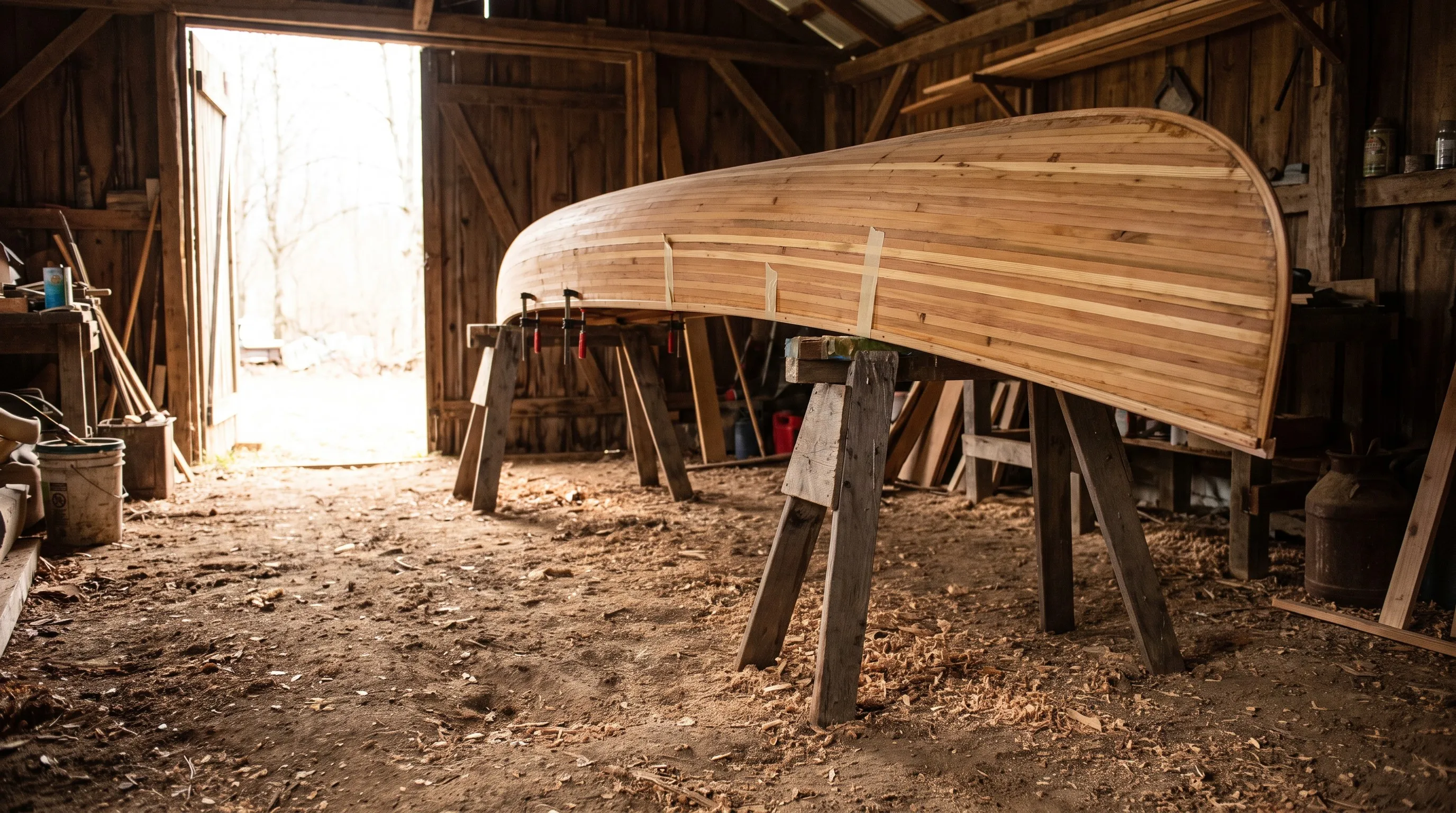
Scott built the two seats out of ash, and he wouldn’t let me pay him for the wood. On Sunday, August 23, the day before Avery went back to school, we set it in the water at the dock.
She climbed in, and it didn’t leak a drop. She posted a picture. That’s the one her mother saw.
And on Saturday, September 12, I got up in the dark and took that canoe out at sunrise, by myself. Clover Lake was flat as glass. The mist came up off it in little curls, and the sky went from gray to pink to gold while I sat out in the middle with the paddle across my knees.
In my jacket pocket, folded in a sandwich bag, was a copy of Gerald’s letter. The original stays in the bank. Old habits.
He was right. I had slept through the best part of that lake for twenty-nine summers.
A signature is only as honest as the hand that held the pen. The one at the bottom of Gerald’s last letter shakes.
It runs downhill. It’s the most honest signature I’ve ever seen.
Nothing closes until the paperwork is clean. Not a sale, and not a family. You can love somebody with your whole heart and still say no to their paper.
And no can be love, too. My husband said so, in a letter he signed with his own shaking hand, the night before he went to sleep for good.
That’s my story. One hospital letter, one bad stamp, one steady no.
This is a work of fiction. Names, characters and events are invented.