You're Just the Babysitter, Marcus — Part 3
She walked out of the eleventh floor with her case gone and her fiancé waiting. What Marcus said to him decided the next six months.
Gregory stopped a few feet short of him, the way a man stops when he isn’t sure he’s allowed to come the rest of the way.
“You’re Marcus.”
“Yeah.”
“Greg.”
Neither of them put a hand out, and neither one made it strange.
“I’m not going to ask you what happened in there.”
“Okay.”
Then he asked.
“How many times?”
Marcus looked past him at the water cooler.
“Ask her.”
“I’m asking you.”
“I know you are.”
Gregory took that. He stood there and took it, and to his credit he didn’t ask a third time.
Behind him, across the carpet, Simone was sitting with her hands in her lap and the two coffees going cold on the little table.
“One more,” Gregory said. “Then I’ll leave you alone.”
“Go ahead.”
“Is she good with them? When she’s there.”
Marcus took longer with that one.
He thought about May 20 and the step and the good jacket.
Then he thought about a Saturday in the fall at a pumpkin lot, two hours, and Nia talking the entire ride home about a goat.
“Yes,” he said. “When she’s there, she’s good with them.”
Gregory nodded once.
“Okay.”
He went back across the carpet and sat down next to her and didn’t touch the coffee either.
Rochelle waited until he was out of earshot.
“You could have told that man everything.”
“I know.”
“Why didn’t you?”
Marcus watched the elevator numbers go down and come back up.
“Because one day he’s going to be in a car with my kids,” he said. “I’d rather he like me.”
At 11:31 they went back in.
Ms. Pruitt did the talking, and it was short.
The petition was withdrawn. Harold wrote it down the way he wrote everything down, without any expression at all.
“Then the order stands as it is,” he said.
He turned a page.
“Ms. Bell. If you want to ask for more time in six months, you’re entitled to ask.”
Simone looked up.
“You’ll want something to show,” Harold said.
Simone signed where Ms. Pruitt put her finger.
On the way out she stopped at the end of the table, close enough that he could have said any of about forty things.
“Marcus.”
“Simone.”
That was all either of them had, so that was where they left it.
Harold closed the folder and put the pocket watch away and told them both to drive safe.
At 12:20 in the parking deck, Gregory turned the key and then turned it back off.
Simone told him.
She left out nothing that mattered, which took eleven minutes, and the car did not move the whole time.
When she was done, Gregory sat with both hands on the top of the wheel.
“My mother’s got the blue room half painted.”
“I know.”
“You want me to tell her?”
“No,” Simone said.
She looked at the concrete pillar in front of them.
“I’ll tell her.”
Rochelle drove home too, and about a mile from the house she finally said it.
“You want to stop and get something?”
“I’ve got to be in the pickup line at four.”
She laughed at that, once, with her mouth closed, and put her blinker on.
Nia was on the fourth stair that night, same as February, same hoodie.
“Was it today?”
“It was today.”
“What happened?”
He sat down two steps below her, so she’d be the taller one.
“Your mom asked the court if you and Des could live with her. It’s not going to happen. You’re staying here.”
Nia let out a breath she’d apparently been holding since breakfast.
“Is she mad?”
“Probably.”
“Is she coming Saturday?”
And there it was, the same question, on the same stair, in the same house.
“I don’t know,” Marcus said.
Nia waited.
“But I’m going to quit making up reasons for her,” he said. “If she doesn’t come, I’m just going to tell you she didn’t come.”
Nia looked at him for a second.
“I know, Dad,” she said.
He didn’t ask her how long she had known, because he found he didn’t want the number.
He wrote it out on the third stair after she went up.
March 4. 9:30 a.m. Mediation. She asked for full custody.
Told Nia: the truth.
That was the shortest entry in three years.
On March 22, a Saturday, the doorbell went at 6:14 in the evening.
Nia already had her coat on. She had put it on at 5:40.
“I know I’m late,” Simone said.
“You’re here,” Marcus said.
The watch on his wrist beeped seven when they pulled out of the driveway, and he stood in the door and listened to it go.
In April there was a spring program at the school, the kind with folding chairs and a piano that needed tuning.
Marcus hadn’t told her about it.
She was in the back row in her work clothes when he came in.
Afterward, in the parking lot, he asked her how she knew.
“I called the front office,” Simone said. “They have a calendar.”
“They do.”
“They’ve had one the whole time.”
She said that last part mostly to herself.
Desmond turned seven in May, which meant he had been six for a year, which meant somebody had been wrong about it in a hallway in February.
Simone brought a book about dinosaurs, the big kind with the fold-out pages.
Desmond turned it over and read the back the way he read everything now.
“It says ages six to nine.”
“You’re seven,” Simone said. “You’ll grow into the back half.”
He thought that was the funniest thing anybody had ever said.
Rochelle came through with a foil pan and found Simone at the sink, washing out the punch bowl.
They did not become friends that afternoon.
But Rochelle handed her the dish towel, and for Rochelle that was a treaty.
In June, on the porch step, Nia asked.
She was ten by then and she asked the way ten-year-olds ask, straight out and looking at her shoes.
“Why’d you go?”
Simone sat down on the step next to her, which took a second, because she was wearing the wrong clothes for a step.
“I left,” she said. “Your dad didn’t send me away. Nobody made me.”
Nia turned her head.
“Okay.”
“It wasn’t about you.”
She had said that sentence in a hallway in February and it had meant nothing at all.
It meant something on the step.
Nia didn’t say anything back. She leaned over about two inches, until her shoulder was against her mother’s arm, and left it there.
They sat there until the streetlights came on, which was later in June, which was the one good thing about June.
The notebook stayed on the hall table next to the bowl where the keys went.
Marcus kept writing in it. He had tried stopping twice and both times it felt like closing his eyes on a stair.
The entries just got shorter.
June 7. 10:00 a.m. On time.
Told Nia: nothing. She was already in the car.
July 19. 10:00 a.m. Canceled Thursday, two days’ notice, offered Sunday.
Told Nia: Sunday instead. She said fine.
August 16. 10:20 a.m. Twenty minutes late. Called at 9:55.
Told Nia: she called.
September 9. 5:58 p.m. Early.
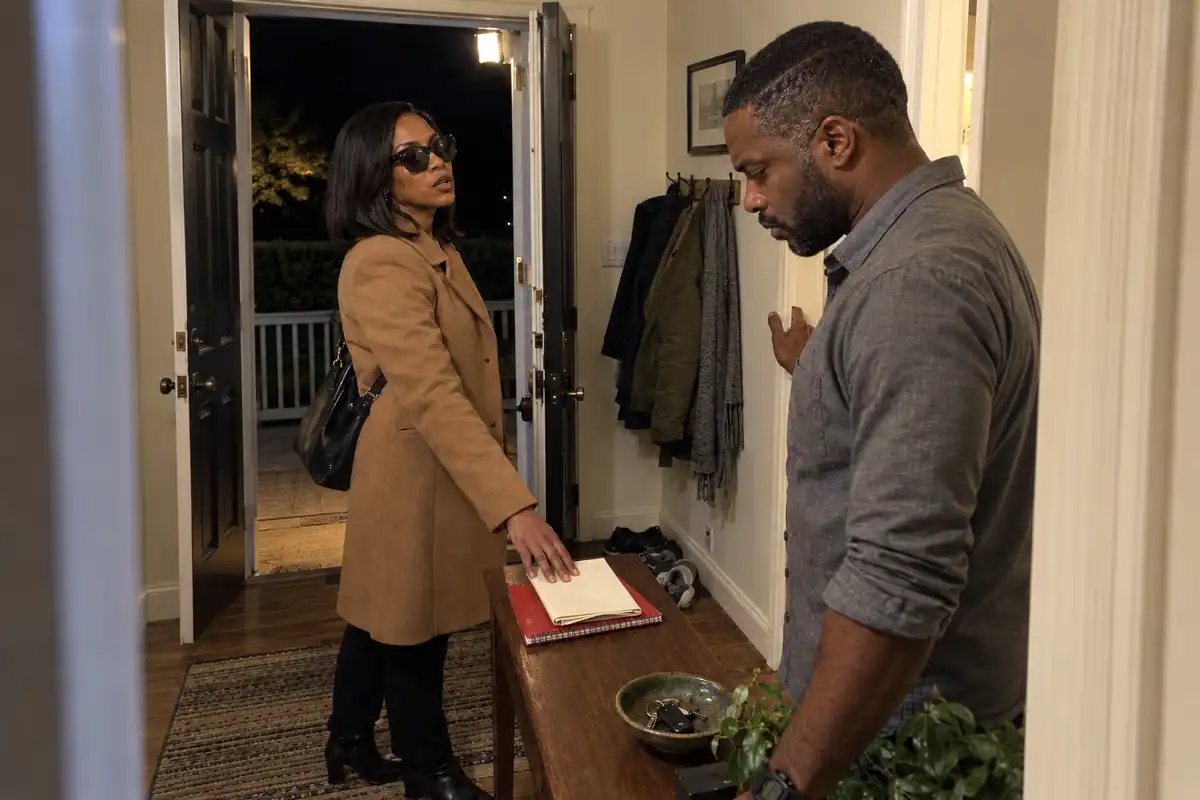
At 6:58 on the second Thursday in September, Marcus Bell was writing in a notebook when someone knocked.
He knew the knock by then.
He capped the pen and laid it on the table and opened the door, and Simone was standing on the mat with the car running at the curb and Desmond already climbing into the back of it.
“They’re getting in,” she said.
“They do that.”
She looked at the hall table, at the bowl, at the notebook lying open beside it.
She looked at it for a while this time.
“You were never the babysitter,” she said.
“I know.”
“Are you still writing it down?”
“Every time.”
Simone nodded, and pulled her keys out of her pocket, and turned to go.
“Good,” she said. “Keep it.”
He left the door open, because it was warm and because there was nothing out there he needed to keep out.
On the hall table the notebook lay open at a clean page with the pen across it.
Out at the curb, Desmond was explaining, at considerable volume, that his father owned a watch older than dinosaurs.
Marcus stood in the doorway and let the porch light go out past him, all the way down to the car.
Three years, a man had written down every time she didn’t come, so he’d never have to guess in front of his daughter again. Would you have written that last line the way he did?
This story is fiction. The names, characters, places, and events in it came from the author’s imagination, and any resemblance to real people, living or dead, or to real events is coincidental.