Let the Grown-Ups Run It — Part 2
"Mom, your time is done." Ruth says no in front of ninety guests and drives home. By Monday, Kevin is at her kitchen table with a folder.
Kevin met him in January at some business breakfast down in Chattanooga. Chase is 38. He wears loafers without socks and says words like scalable and synergy with a straight face.
He calls himself a growth partner. Kevin brought him to Easter dinner at my house this year.
Chase called my farmhouse rustic, which I believe was meant as a compliment. Then he stood on my back porch, looked out over the pasture, and asked me how many acres we had out here.
I told him fourteen.
He nodded, the way a man nods when he’s writing something down in his head.
I announced my retirement in January. Forty-four years felt like enough, and my knees agreed. Kevin offered to plan the party.
“You’ve done enough, Mom. Let me handle it.” I was touched. I should have wondered why.
My last day was Friday, June 12. I did the last job myself. A water pump on a 1998 pickup that belonged to a retired preacher, who had brought me every truck he’d owned since 1983.
When I handed him his keys, he held on to my hand a little longer than he needed to.
Around 3:00 that afternoon, I saw Kevin step out behind the building with his phone. He talked a long time, walking little circles by the dumpster. When he came back in, his face was red, and he went straight into the office and shut the door.
I thought it was an angry customer. I had no idea it was a bank.
By Saturday evening, the boys had hung a banner across the back wall of the shop. It said, “Forty-Four Years. Thank You, Ruth.”
Otis had been smoking a pork shoulder since 4:00 that morning. Somebody brought a sheet cake with a wrench drawn on it in blue icing.
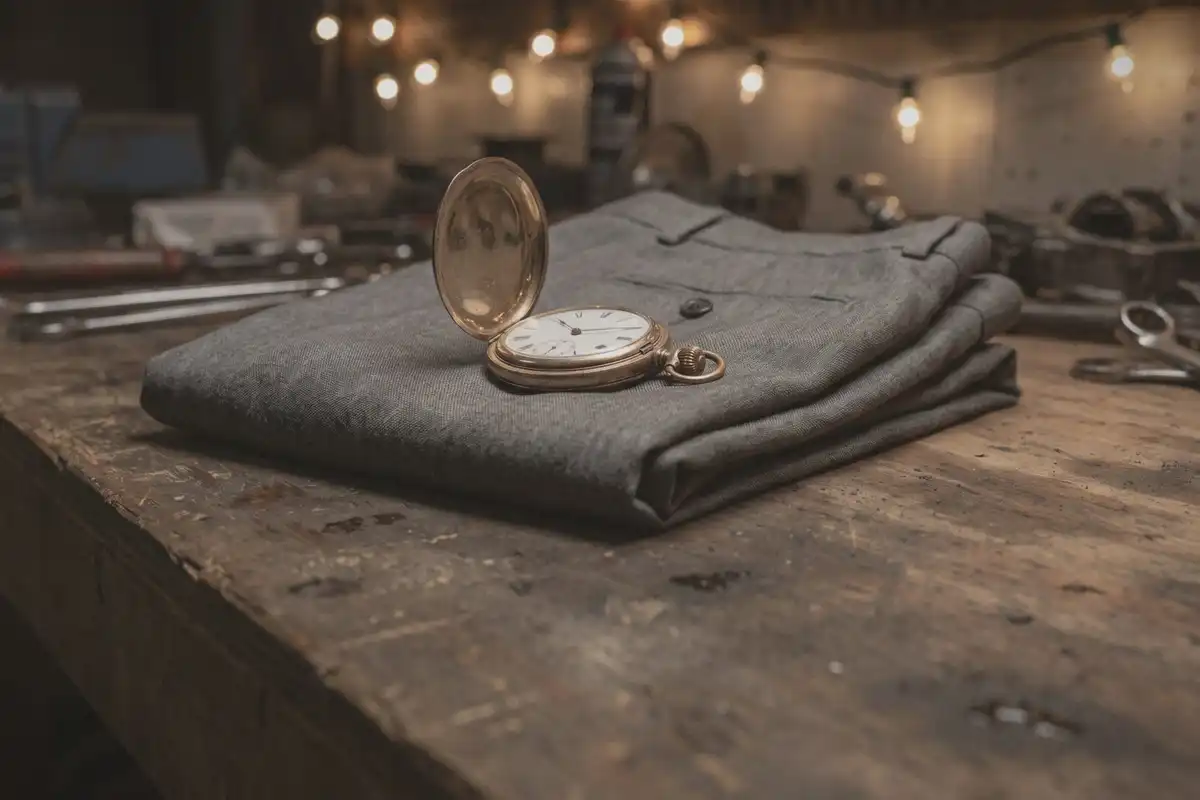
I wore my good gray slacks and a blouse Amanda gave me for Christmas. The watch was in my right pocket. I had set it that morning by the time on the radio, and it hadn’t lost a second all day.
Folks kept coming up to me with stories. The woman whose transmission I rebuilt the winter her husband was laid off, when I let her pay me $20 a week.
Otis stood by the drink cooler with his wife and shook hands like a deacon. Brooklyn ran around refilling tea. Amanda sat at a table near the door, where she could slip out if she needed to.
And Kevin had a microphone. Chase had set up a speaker on top of my tire balancer.
He had also brought a case of champagne and a stack of plastic glasses. That struck me as odd. My customers are sweet tea people.
At 7:30, Kevin tapped the microphone, and everybody quieted down. He thanked them all for coming. He told a story about me teaching him to change a tire when he was nine, and how he cried because the lug nut wouldn’t budge.
People laughed. For a moment I thought I had misjudged the champagne.
Then he said, “Now, Mom has run this place for forty-four years, and nobody ever did it better. But the world has changed. Cars are computers now. And a shop like this has to grow or die.”
He put his hand on Chase’s shoulder. “So I’m proud to announce that Chase Dillard and I have formed Sutton Auto Group. By next spring, we’re doubling this shop, four bays to eight, with a quick-lube lane out front. And I believe in it so much, I’m putting my own house up as collateral to get it done.”
Some people clapped. Most people looked at me.
Kevin turned and raised his plastic glass in my direction. “Mom, your time is done. Let the grown-ups run it.”
Chase laughed first, loud and easy, like he had heard the line before. Then a few of the younger folks laughed, the kind who laugh when they don’t know what else to do.
Amanda laughed too. Just a small one. Then she looked down into her cup and stayed there.
Otis did not laugh. He set his drink down on the cooler very carefully, the way you set down something you’re afraid you might throw. Brooklyn was standing by the cake with a knife in her hand, staring at her uncle like he had grown a second head.
He never asked me about any of it. Not once. Back in the winter, we had talked about him and Otis running it together someday, Kevin at the counter and Otis in the bays.
We agreed to sit down after the party and work it out.
Now there was a stranger in loafers standing where Otis should have been. And Kevin had just pledged a house to a bank, in front of ninety witnesses, when the ground under that house had my name on it.
He did it in front of all those people on purpose. I understood that later.
A mother can’t tell her son no in front of the whole town. That was the plan.
Kevin held his hand out to me. “Come on up here, Mom. Hand me the keys. Let’s make it official.”
I walked up. I took the microphone out of his hand.
I could feel the watch against my leg. It felt heavier than any wrench I ever owned.
I had a choice right then. I could make a scene, and half the town would say Ruth Sutton lost her temper at her own party, bless her heart. Or I could smile and hand over the keys, and spend the rest of my life watching my son sign papers he didn’t understand.
I did neither one.
I said, “No. Not tonight.”
That’s all. Three words. The whole shop went so quiet you could hear the drink cooler humming.
Then I turned to the crowd and said, “Thank y’all for forty-four years. You kept me in business, and I kept you on the road, and I believe we both got the better end of the deal. Otis has been smoking that pork since 4:00 this morning, so eat every bite.”
People laughed, the good kind this time, and some of them clapped. I handed Kevin back his microphone. His face had gone the color of transmission fluid.
Kevin spoke low, through his teeth. “Mom. What are you doing?”
“Going home, son. We’ll talk.”
I hugged the preacher. I hugged Brooklyn, who whispered, “Grandma, what was that?”
I told her, “Not now, baby.”
Otis walked me out to my truck without a word. He opened the door for me the way my daddy used to open it for my mother.
I didn’t cry until I got home. Then I sat down at my kitchen table, in the same chair where I had rebuilt that watch. I set it in front of me and cried harder than I had since Harold’s funeral.
The watch just kept on ticking. That’s what a good watch does. It doesn’t care what kind of day you’ve had.
Sunday afternoon at 2:00, I called Kevin. “Son, is there anything about this loan you want to tell me, before somebody else does?”
“Mom, it’s handled. The house is mine. The bank loves it. You embarrassed me in front of the whole town, but I’m willing to let that go. Just enjoy your retirement.”
I said, “All right,” and I let him hang up.
Harold always said, when something acts strange, check the ground first. So on Monday morning, that’s exactly what I did.
At 8:00, when the doors opened, I was standing at the counter of the Register of Deeds in the courthouse on the square. I asked for certified copies of our 1979 deed and of the papers my lawyer had filed after Harold died.
I paid the fees. Then I walked down the hall to the assessor’s office and got a printout of the tax card for our parcel.
Fourteen acres. Owner, Ruth Sutton. Two dwellings.
One built in 1938. One built in 2012.
At 9:00, from my truck in the courthouse lot, I called my lawyer, Ms. Tillman. Her office is in an old brick house across the street from the courthouse.
Her assistant told me Ms. Tillman was in trial through Wednesday, but she could see me Thursday morning at 10:00. I took it.
Nobody in my family knew I had done any of that. When you’re tracking down a problem in an engine, you don’t tell the customer what’s wrong until you’re sure.
At 6:30 that evening, Kevin’s truck came crunching up the gravel. He had a manila folder under his arm and a smile he had clearly put on in the truck.
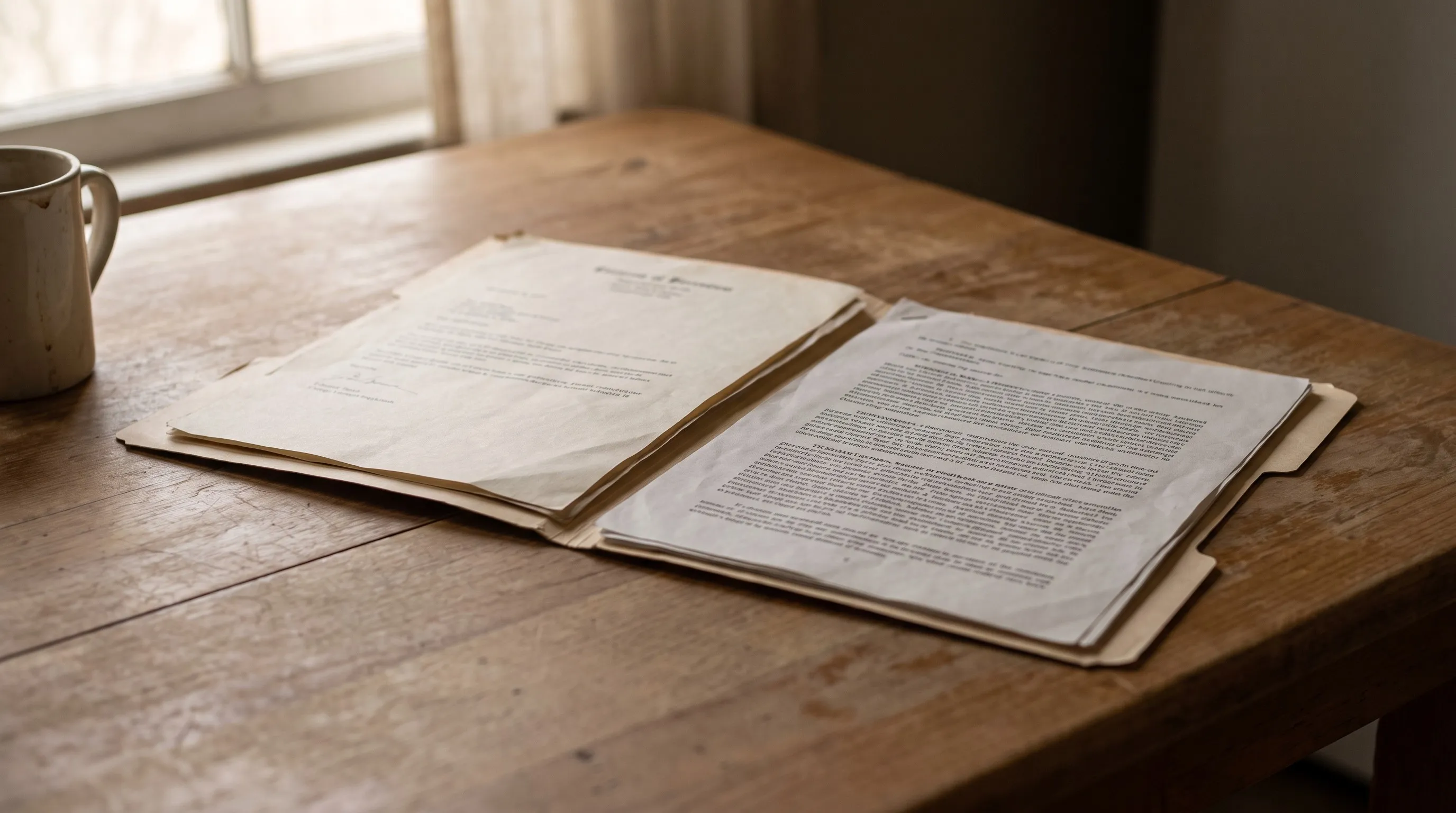
He sat down at my kitchen table, in Harold’s chair, and slid the folder across to me. “Mom, it’s nothing. The bank just needs your signature on a couple of things. Dad never got around to the paperwork on my place, so technically the land is still in your name. It’s a formality.”
Technically.
On top of the folder was a letter from Mr. Fenwick, the loan officer at Harlan Springs Community Bank. Under it was a deed of trust. In Tennessee, that’s the paper that lets a bank take your property if the loan goes bad.
Under that was a ten-year lease on my shop building to Sutton Auto Group, with my name typed on the signature line. And under that was something called a title commitment, from the company the bank had hired to search the county’s land books.
I said, “Kevin, tell me in your own words what this paper does. Not what the bank says. What you think it does.”
That was his second chance, and I made sure he had it.
He said, “It lets the bank hold my house as collateral. That’s all. If the business does fine, which it will, nothing ever happens.”
“And if it doesn’t do fine?”
“Mom. It will.”
I put on my glasses. I went through that deed of trust the way I’d go through a work order on a stranger’s car, line by line.
On the third page was the legal description. It didn’t say two acres. It didn’t say Kevin’s house.
It described the whole tract, from the road all the way back to the creek. Containing fourteen acres, more or less.
My house. My barn. The kitchen I was sitting in.
I asked him about that. He told me the bank would release the rest of it later, that Chase had explained it all, that it was standard. I could tell by his face he had never looked past the signature line.
Then I turned to the title commitment and found the date at the top.
It was dated June 11. A Thursday. Two days before my party.
I said, “When did the bank call you about this?”
“Friday.”
He had known for a whole day before he raised that glass.
I said, “I’m not signing this, Kevin.”
“You don’t understand how this works.”
“I understand it well enough to find my own kitchen on page three.”
He stood up so fast the chair scraped the floor. “That is my house, Mom. I’ve lived in it going on fourteen years. I pay the taxes on it every single month.”
“You send me $150 a month. The county sends me the bill.”
He left the folder on the table and said he would give me some time to calm down. After his taillights went down the lane, I laid every page out on my table and took a picture of each one with my phone. Then I put the folder in Harold’s desk and locked the drawer.
On Tuesday, at 5:30, Otis knocked on my back door. He said Chase had come into the shop around 4:00 with a laptop, walked through the bays like he was measuring for curtains, and handed Otis a sheet of paper. Chase had told him, “Here’s your new role.”