She Called Me the Help — Part 1
"She's the help," Paige told a magazine reporter, pointing at the woman who had baked every cake in that glass case since 3:00 that morning.
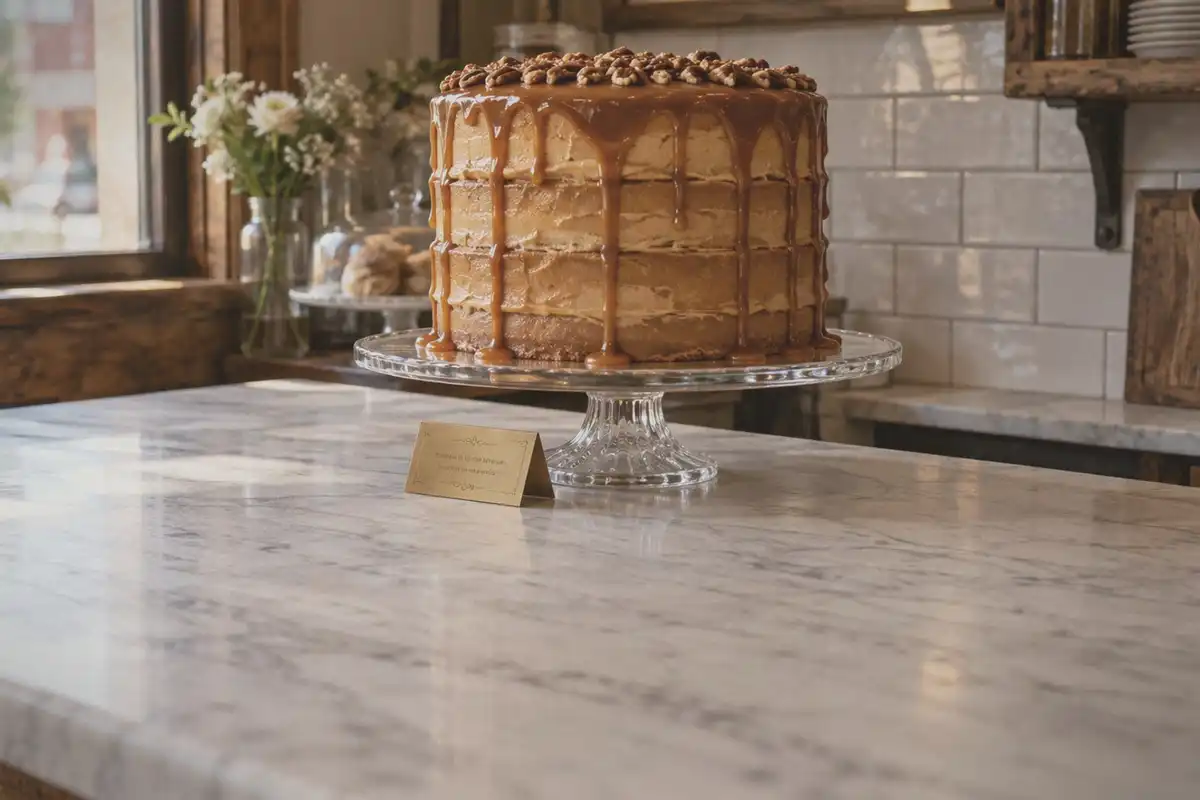
The caramel cake was still on its glass stand when my daughter-in-law pointed at me with a champagne glass.
I had been up since 3:00 that morning to bake it. Four layers. Burnt sugar icing, cooked slow in a heavy pan, the way my mother taught me.
It sat on a glass stand in the center of the room with a little gold card in front of it. The card had fancy lettering on it. “The Gilded Crumb. Five Years of Paige.”
There were about sixty people in that bakery. Friends from her gym. Her mother.
A young woman from Valley Table magazine with a notebook and a camera on a strap. And a man in a navy blazer I had never seen before, who kept looking at the ovens like he was pricing them.
The young woman from the magazine smiled at me. I was standing by the kitchen door in my apron, the one with the flour still in the pocket seams. She asked Paige, “And who is this lovely lady?”
Paige laughed. She didn’t even turn all the way around. She said, “Oh, that’s just Joyce. She’s the help.”
Her mother laughed too. A few other people laughed because Paige was laughing. My son, Travis, looked down at his shoes.
I didn’t say a word. I untied my apron, folded it in half, and laid it on the counter. Then I walked into the back office, took one old blue book off the shelf, and walked out the side door into the April sun.
In my purse was an envelope with Paige’s name on it. Inside that envelope was the bakery. I had planned to sign it over to her and my son that afternoon, in front of everybody, with a slice of that cake on a paper plate.
I didn’t sign it.
My name is Joyce Pickett. I’m 67 years old, and I have been baking for money since I was 19. That’s forty-eight years of flour on my hands.
I started at a diner on the highway outside Cedar Hollow, Tennessee, about forty minutes from Knoxville. I made biscuits at 5:00 in the morning for truck drivers who didn’t say thank you and didn’t need to.
Their plates came back clean. That was thank you enough.
Then for thirty-four years I ran the bakery counter at Stroud’s Market on Main Street. Birthday cakes. Funeral pies.
Wedding sheet cakes for girls whose mothers I had made wedding sheet cakes for.
Baking teaches you a few things about people. It teaches you patience, because you cannot rush bread.
It teaches you that a thing can look beautiful on top and be raw in the middle. And it teaches you about proof.
Bakers use that word differently than lawyers do. When we say dough is proofing, we mean it’s resting in a warm place, rising, showing you what it really is.
You don’t poke at it. You don’t yell at it. You give it time, and the truth comes up on its own.
My husband, Eugene, used to say it better than I could. He’d stand in the kitchen doorway in his work boots, watching me with a bowl of dough under a dish towel, and he’d say, “Give it time and a warm room, Joyce. Dough always shows you what it’s made of.”
Eugene drove a propane truck for thirty-one years. He was a quiet man with big hands and a laugh you could hear from the mailbox.
He passed in October of 2019, of a heart attack, in his recliner, with the ball game on. He was 64.
After he passed, the town started looking at me a certain way. The sweet old lady look. The look that says she bakes pies and goes to church and doesn’t understand money.
People started explaining things to me slowly.
The man at the tire shop. The girl at the pharmacy. My own son.
I let them. I was tired and I was grieving, and it was easier to let people think I was simple than to argue.
That was my mistake. I trusted quiet to do a job that only words can do.
My mother’s name was Opal. She was born in 1931 on a tobacco farm in Hawkins County.
When she was 21, in 1952, she started writing her recipes down in an old ledger from the feed store where her daddy bought his seed. It has a faded blue cloth cover and a cracked spine, and the first pages still have columns for pounds and prices printed in red ink.
My mother wrote right over those columns. Her lemon chess pie. Her cinnamon pull-apart bread.
Her sweet potato pie with the brown butter. And on page forty-one, her caramel cake. The one with the burnt sugar icing that takes forty minutes of stirring and does not forgive you if you walk away.
My mother made that cake for my wedding on June 11, 1983. After the reception, Eugene took a pencil out of his shirt pocket and wrote in the margin of page forty-one.
I have looked at it more times than I could ever count. It says, “Married the baker’s daughter. Best decision I ever made. The cake is second best. E.”
My mother passed in 2008. The book came to me. And for almost thirteen years, it sat in my kitchen, next to the flour canister, where it belonged.
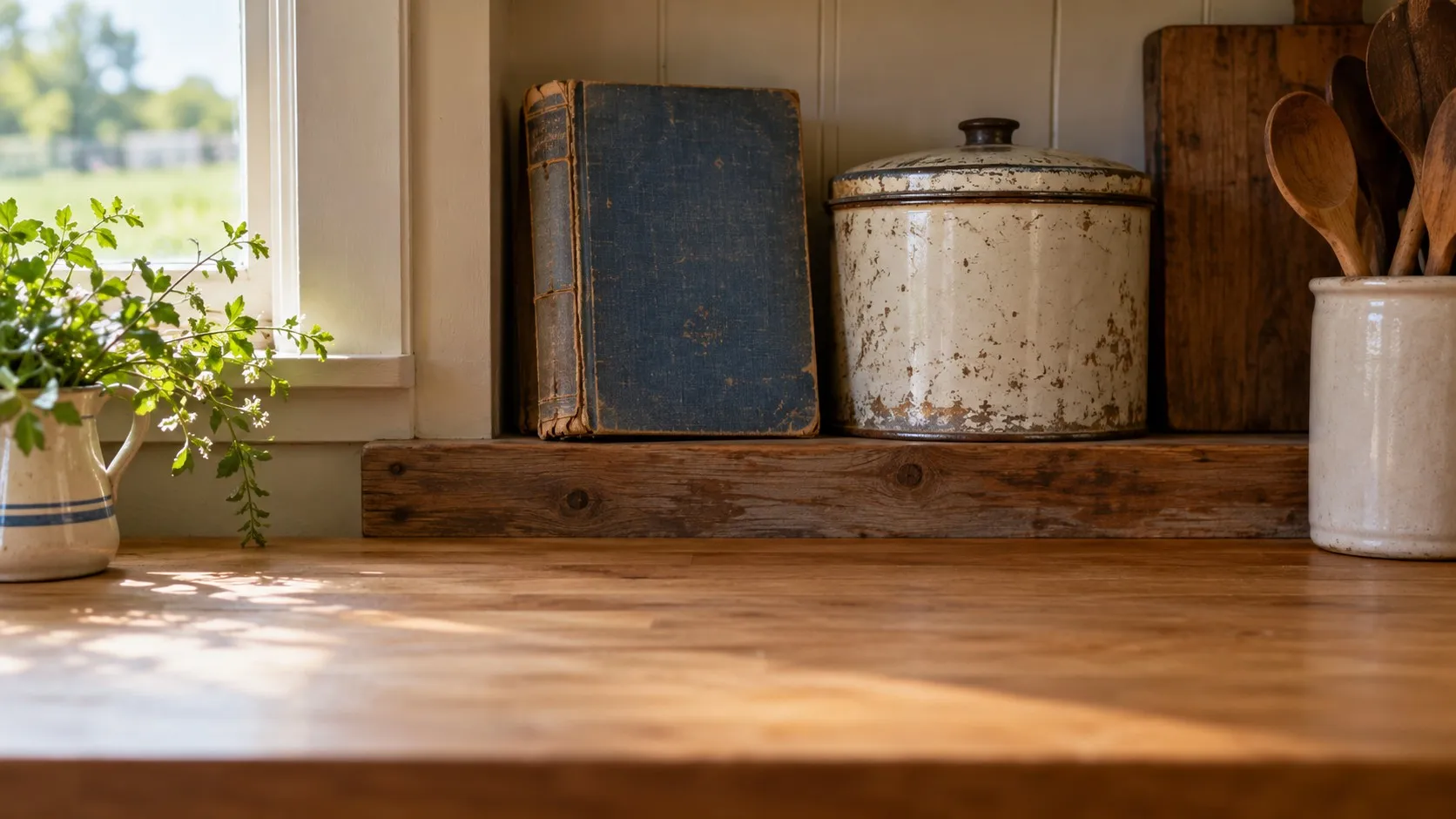
Until the bakery.
In the fall of 2020, my daughter-in-law, Paige, came to me with an idea. She wanted to open a bakery. A pretty one, with white subway tile and gold lettering and an espresso machine.
She had a name picked out already. The Gilded Crumb.
The trouble was, Paige had tried a business before. A clothing boutique, in 2018. It failed within a year, and it left her with $38,000 in credit card debt and a credit score around 540.
No landlord in the county would lease her a building. No bank would lend her a dime. She cried at my kitchen table and made me promise not to tell anyone, especially her mother.
I kept that promise.
I had Eugene’s life insurance. $150,000. I had never touched it.
So I went to my attorney, a careful woman named Ms. Holloway who has an office above the hardware store, and I asked her how to do this the right way.
In February of 2021, Ms. Holloway helped me form a company with the State of Tennessee. A limited liability company. I named it Opal’s Kitchen, after my mother.
I was the only member. The only owner. Then the company registered the trade name Paige wanted, The Gilded Crumb, so she could put it on the window.
Opal’s Kitchen signed the lease on the old shoe store on Main Street. $2,400 a month. The landlord, a sharp old lady named Agnes Crenshaw, wanted a personal guarantee, so I signed that too.
My name. My savings behind it.
Then I put $85,000 of Eugene’s money into the place. $52,000 for equipment. Two convection ovens, a deck oven, a sixty-quart mixer, and the glass display cases.
$33,000 for the build-out. The tile, the plumbing, the counters, the gold lettering.
Opal’s Kitchen hired Paige as general manager. A salary of $48,000 a year, and a bonus out of the profits.
I never took a single dollar out of that business. Not one. Every spring, I paid the $300 fee to file the annual report with the Secretary of State.
Every year, the accountant mailed the tax papers to my house, because that’s whose name was on them.
And three mornings a week, Tuesday, Thursday, and Saturday, I let myself in the back door at 3:30 and baked my mother’s recipes out of that blue book. The book lived on a shelf in the back office so I wouldn’t have to carry it back and forth.
Why didn’t I tell anyone? Because I thought it was a bridge, not a building. The plan was simple.
Once Paige’s credit healed and the business was steady, I would sign the whole company over to her and Travis. Ms. Holloway drew up the papers in March of this year.
An assignment of membership interest, fifty percent to Travis, fifty percent to Paige. All it needed was my signature.
I was going to give it to them at the five-year anniversary party.
Paige is 35. She’s pretty in the way that takes a lot of work, and she works at it.
Hair done every five weeks. Nails the color of whatever is in season.
She photographs every pastry before anyone is allowed to eat it. She has something like 11,000 followers on Instagram, and I believe she thinks of every one of them as a little vote.
I don’t want her to be a cartoon in this story, because she isn’t one. Paige grew up in a rented duplex in Knoxville with a mother who dressed her in labels she bought on credit.
Her mother, Lorraine, taught her that people decide what you’re worth by looking at you. That value is printed on the tag.
When the boutique failed, I think Paige felt the whole world had seen the price tag come off. The Gilded Crumb was how she sewed it back on.
I understood that. I even felt for her. But understanding a person is not the same as letting her walk on you.
Lorraine Vance is 60. She sells jewelry and scarves out of a little shop in Knoxville, and she calls everybody “sugar” in a voice that means the opposite. She has never once called me by my first name.
At Travis’s wedding, she asked me if I had made my dress. I had. She looked me up and down and said, “I could tell.”
Then there’s my son.
Travis is 38. He fixes heating and air conditioning for a company out of Maryville.
He is a good man with his hands and a coward with his mouth. I say that with all the love a mother has, because I raised him, and some of that is on me.
Eugene was quiet too, but Eugene’s quiet was a wall you could lean on. Travis’s quiet is a door he keeps shut so nobody asks him to pick a side.
Travis and Paige have one daughter, my granddaughter, Grace. She’s eight.
She has Eugene’s ears and my mother’s stubborn chin, and she likes to stand on a step stool in my kitchen and crack eggs into a bowl, shells and all. We’re working on that.
And there’s Chloe.
Chloe Tolliver started at the bakery when she was 16, washing pans after school. She’s 21 now. She comes in at 3:30 on the mornings I bake, and for five years she has stood beside me with her hair tied up in a bandanna, learning every recipe in that blue book.
She has the best hands for dough I’ve seen since my own mother. She doesn’t talk much. She notices everything.
The anniversary party was on Saturday, April 18. The bakery had opened on a Saturday five years and one day before.
Paige had planned it for months. There was a balloon arch in white and gold. A photographer.
A table of free samples with little cards in a fancy handwriting font. The reporter from Valley Table magazine was writing a feature about small-town businesses in East Tennessee, and Paige had called her three times to make sure she came.
Paige asked me to bake the cake. Of course she did. She always asked me to bake the cake.
So I got up at 3:00 that Saturday morning. By 3:30 I was in the back of the bakery with Chloe, stirring burnt sugar icing for forty minutes while the rest of Cedar Hollow slept. Chloe did the pull-apart bread.
I did the lemon chess pies and the cake. We worked mostly without talking, the way you do when you trust someone’s hands.
Around 5:00, Chloe said, “Miss Joyce, are you nervous?”
I told her, “No, honey. I’m happy.”
And I was. I had on my good blue blouse under my apron. The envelope was in my purse, hung on a hook in the back office.
I pictured Travis’s face when he opened it. I pictured Paige finally being able to say, this is mine, and have it be true.
I had no idea what she was about to say about me. And I had no idea who the man in the navy blazer was.