The Piano Was Not His to Sell — Part 1
A fork against a tea glass, a little after 2:00 on Thanksgiving. Then Grant announces he has sold her late husband's piano, and Loretta goes still.
My son-in-law tapped his fork against his tea glass a little after 2:00 on Thanksgiving Day, and the whole table went quiet.
We were in my daughter’s dining room in Juniper Falls, North Carolina. Six of us. The turkey was half gone.
My two sweet potato pies sat waiting on the sideboard, under the big old mirror that used to hang in my own dining room.
Grant stood up and smiled like a man handing out prizes.
He said, “Big news, everybody. I sold the piano. Mr. Pratt is picking it up Saturday morning at 10:00. $4,500. And the new television goes right where it sat.”
That piano was my husband’s. A walnut baby grand. Vernon played it for thirty-five years, and he had been gone a little over two.
I set down my fork. “Grant, that piano isn’t yours to sell.”
He didn’t even blink. “We’ve been carrying you for two years, Loretta. The piano is the least you owe us.”
His mother laughed. My grandson laughed, because she did. My daughter looked down at her plate.
I didn’t look at Grant. I looked up into that old mirror, and what I saw there hurt worse than anything he had said.
I folded my napkin. I thanked my daughter for dinner. Then I walked out the back door, across the yard, and up the fourteen wooden steps to the little apartment over their garage.
At 11:40 that night, I made one phone call. At 6:10 the next morning, Grant stood at a checkout counter with a television on a cart and a card that didn’t work anymore.
My name is Loretta Dempsey. I’m 70 years old, and for thirty-one years I drove a school bus in Juniper Falls.
Bus 14. I did my safety check at 5:45 on school mornings and picked up my first child at 6:20.
Some years I had more than sixty children on board. I knew which ones got carsick, which ones had nothing in their lunch sacks, and which ones needed to sit up front where I could keep an eye on them.
The woman who trained me was named Thelma. She had been driving a school bus since before I got my license. The first week of August 1987, she sat me in the driver’s seat of an empty bus and pointed at the big mirror over the windshield.
She tapped the glass with one finger. “Children behave for your face, Loretta. They don’t behave for the back of your head. You learn who people are by watching the mirror when they think you’re not looking.”
She was right. That mirror showed me the sweet little girl who pinched the kindergartners when she thought I was watching the road. It showed me the loud boy who slipped his breakfast to a hungry first grader every morning and made sure nobody saw.
The other thing a bus driver knows is the stop arm. That red sign that swings out from the side of the bus with the lights flashing. When that arm swings out, the cars stop.
They don’t have to like it. They don’t have to agree. They just stop.
Most people in town knew me as the sweet lady who waved from the bus. I did wave. But I also watched, and I kept count, and I knew how to put out a stop arm.
I retired in June of 2018, with a small pension from the school system and my Social Security. I’d like to tell you I kept watching my mirror after I turned in my keys.
For a while, I did. Then Vernon died, and I stopped. That’s part of this story.
My husband, Vernon, spent thirty-nine years in the finishing room at the furniture plant, sanding and staining tables he could never afford to buy. But down deep, he was a piano player.
Nobody ever taught him. He played by ear from the time he was eight, on the old upright at our church.
We married in June of 1976. For twelve years after that, we couldn’t afford a piano of our own. So on Saturday afternoons, Vernon walked down to the church and practiced in the empty sanctuary, and I’d bring him a sandwich and sit in the back pew and listen.
When I took the bus job in 1987, I told everybody I did it for the health insurance. That was half true. The other half was a coffee can on the top shelf of our pantry.
Every payday that first school year, part of my check went into that can. By June of 1988, I had $2,400.
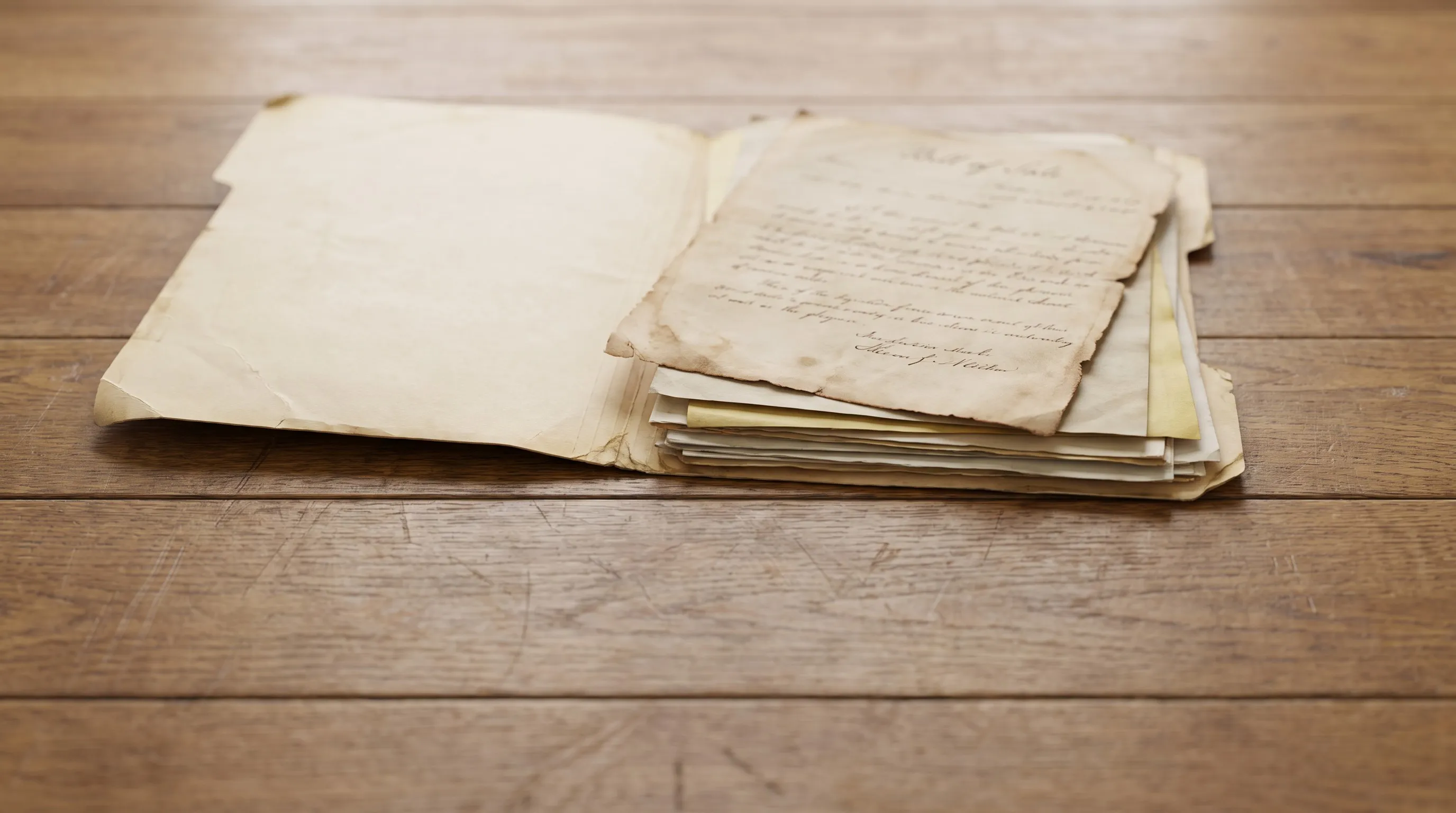
That’s what a retired piano teacher across the county line was asking for her walnut baby grand. On Saturday, June 4, she wrote me a bill of sale by hand.
Sold to Vernon and Loretta Dempsey. The serial number. Paid in full.
A week later, on June 11, 1988, Vernon’s 35th birthday, two men carried that piano into our front room. Vernon sat down and played “In the Garden,” and he cried the whole way through it.
That night, he raised the big lid, took a pencil out of his shirt pocket, and wrote on the underside of it, right on the wood. June 11, 1988. Paid for with Retta’s bus money.
She says play it every day. Vernon.
Nobody else ever called me Retta.
And he did play it, nearly every day for thirty-five years. Hymns on Sunday nights. Old country songs when he was happy.
Something slow and low when he was worried and didn’t want to say so. When our granddaughter, Emma, turned seven, he started teaching her, the two of them squeezed side by side on that bench.
His heart started failing in 2022. That last summer, we moved a hospital bed into our front room, right beside the piano, and by August he couldn’t sit up long enough to play.
He died on Tuesday, October 10, 2023. He was 70. We’d been married forty-seven years.
After that, I could not bring myself to lift that lid.
That December, I moved into the apartment over my daughter’s garage. The house belongs to Nicole and Grant.
Both their names are on the deed. The apartment is one room, a little kitchen, and a bathroom, built over their detached garage by the man who owned the house before them, for his mother.
Nicole asked me to come. She told me I shouldn’t be alone, and the children wanted their grandma nearby.
I offered her $500 a month. She wouldn’t hear of it. “Mom, you’re not paying rent to your own daughter.”
My electricity ran off their meter. So no, I never paid rent.
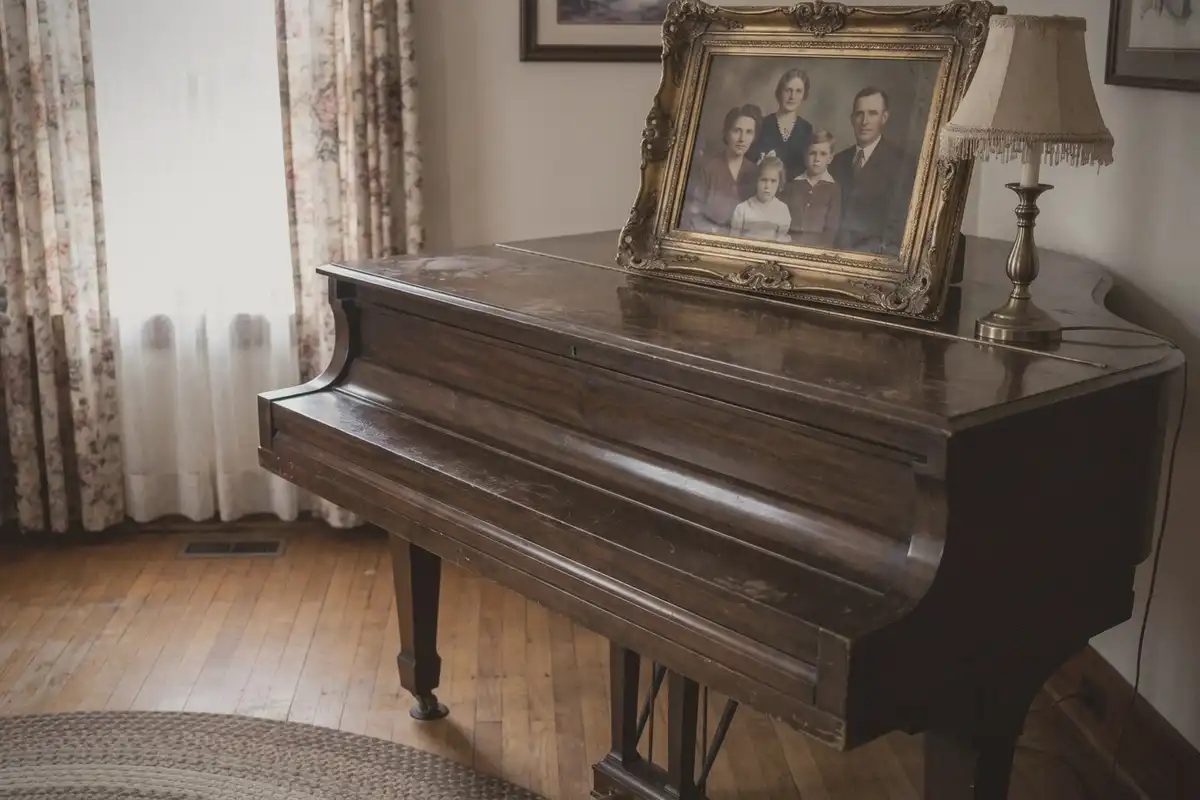
The piano couldn’t go up those steps. So on December 2, 2023, I paid two movers $450 to set it in Nicole’s front room, where Emma could practice. Grant set a big framed family portrait and a lamp on the closed lid.
That same month, Grant offered to handle my bills. “You’ve got enough on you, Loretta. Let me set it all up online.”
I was tired in a way I can’t describe to anybody who hasn’t buried a husband, and I’ve never been much for computers. I gave him the password to my bank account.
My paper statements stopped coming. Grant told me not to worry. “It’s all online now. I’ll keep an eye on it for you.”
In January, he pointed out that since I ate supper with them most nights, it was only fair for the groceries to go on my credit card. It was fair. So on January 5, 2024, I called my bank and added Grant as an authorized user on my card.
That meant the account was still mine. My name, my credit, my bill. He just carried a card with his name on it that drew on my account.
Before long, Mason’s baseball fees went on that card.
Then Emma’s piano lessons. I was glad to do it. They’re my grandchildren.
In March of 2024, I sold the house Vernon and I had raised Nicole in. The money went into certificates of deposit, in my name alone.
Two days after the sale, Grant asked if he could invest it for me. I said no.
That same week, on Thursday evening, he came up my steps with his cap in his hand. His commissions were down that winter. Could I cover his truck payment, just for a few months?
I had already told him no once that week. I didn’t have the heart to say it twice.
So I told him yes, and he set up the payment inside my online bill pay. $612, on the 3rd of every month.
And I never told Nicole whose card was paying for her groceries. I thought I was being gracious. I thought quiet was a kindness.
For thirty-one years, nobody watched my mirror but me. And my first winter as a widow, I handed it to Grant.
Grant is 44. He sells trucks on commission at the dealership out on the highway, and he’s good at it. He has a big laugh and pressed shirts, and he shoveled my steps every time it snowed.
His daddy drove a new car every other year that he couldn’t pay for and wore a gold watch to church. When Grant was 13, the bank took their house.
Grant learned one lesson from that, and he learned it hard. Never let anybody see the holes.
Back then, Grant handled everything. The mail for the house and my apartment came to one box out by the road, and Grant brought it in.
The household bills went to his email. And he said “ours.” Our budget.
Our card. Our money. He said “ours” so long that my daughter forgot which parts were hers.
Two days after he asked me to cover his truck, Grant brought home a used fishing boat. That was Easter weekend, 2024. He bragged that he got it for a song.
I told myself a man can want a boat.
My daughter, Nicole, is 42, and she’s my only child. She’s a nurse on the night shift at the regional hospital, three twelve-hour nights a week.
She came home at dawn, slept through the day, and put her paycheck in the account Grant watched. She didn’t open the mail. She didn’t ask.
Nicole had hated a raised voice since she was a little girl. When things got hard, she looked at her plate and waited for it to pass.
I’d love to blame Grant for that. I can’t. She learned it from me.
Thirty-one years of eyes front, keep driving. I taught her that without ever meaning to.
Mason is 17, a junior in high school and a catcher on his travel baseball team. He’s a good boy, and in those days he still followed his daddy around like a pup. Emma is 14, in the ninth grade, and that fall she played that piano every afternoon after school, with the big lid closed and Grant’s portrait sitting on top.
She plays the way Vernon taught her. Head down, shoulders loose, humming when she thinks nobody’s listening.
And there’s Thelma. She’s 79 now. After she trained me, she ran dispatch at the bus garage for years.
For longer than I can count, she and I have eaten lunch together every Tuesday at the diner on Main Street. She still drives herself everywhere, and she still doesn’t miss a thing.
The Tuesday before Thanksgiving, Thelma and I had our lunch at the diner, same as always. We sat in our booth from 11:30 until nearly 2:00.
That evening, I went over to the house for supper, and I noticed something in the front room. Grant’s portrait on top of the piano had been moved. Not much.
An inch or two to the left. And the lamp cord hung down the wrong side of the piano leg.
Thirty-one years of watching mirrors, and I noticed. And I didn’t ask. I told myself Nicole had been dusting.
Nicole doesn’t dust on a Tuesday. She sleeps. I knew that, too.
I had no idea that a man had stood in that room at 12:30 that day, raised the lid of my husband’s piano, and counted $500 into Grant’s hand.