She Called Me the Help — Part 2
A caramel cake on a glass stand, a folded apron on the counter and one old blue book under Joyce's arm. By Wednesday, the whole town was talking.
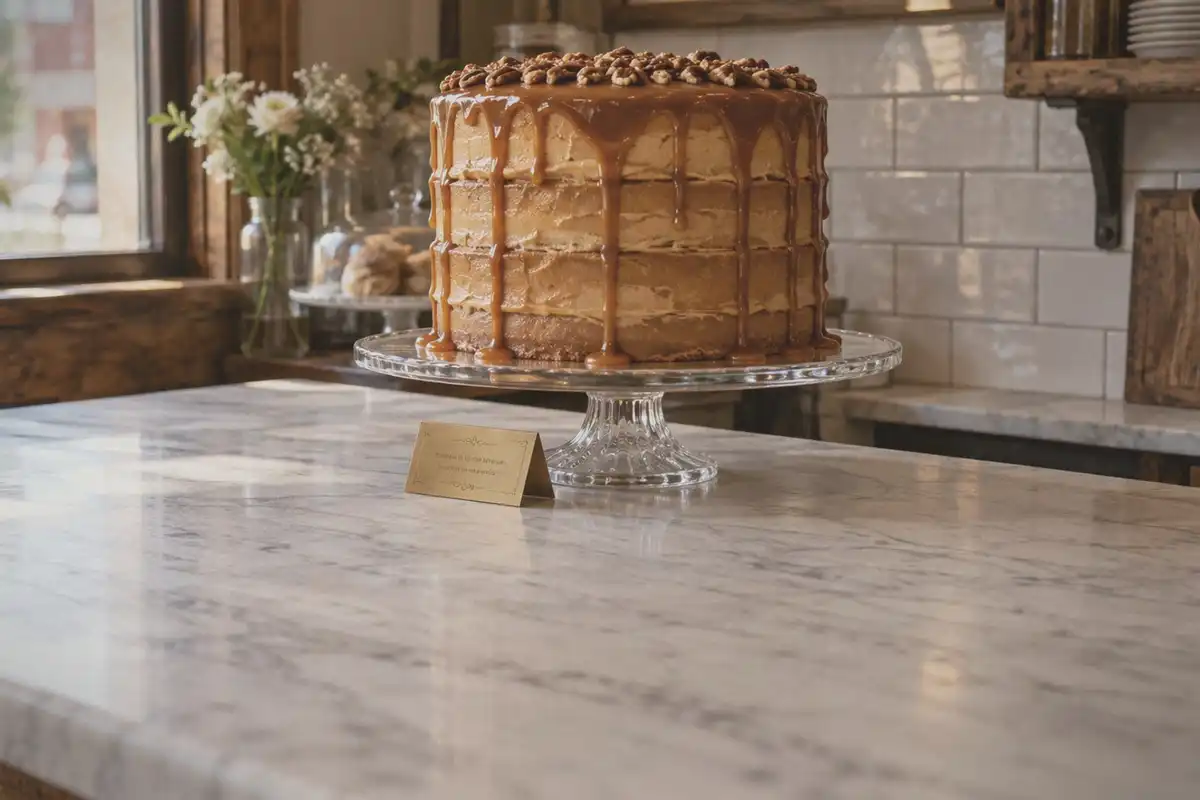
The party started at 4:00 in the afternoon. By 4:15 the place was full. Paige wore a white dress and gold earrings that matched the lettering on the window.
Lorraine wore a leopard print scarf and stood by the espresso machine telling people she had “helped with the branding.”
Travis came in late, holding Grace by the hand. She let go of him the second she saw me and ran straight to the kitchen doorway, because she knew where the cake was.
I gave her a fork and a promise that she’d get the first slice after the speech. She hugged my waist and left a smudge of frosting on my apron. I didn’t mind one bit.
At 4:40, Paige tapped a spoon against her champagne glass and stood on the little platform by the front window. The afternoon light came through the gold letters and made her look like a magazine cover. I think she planned that.
She thanked everybody for coming. She thanked her gym friends. She thanked her mother “for the vision.”
She thanked her followers, all 11,000 of them, even though most of them were not there. She thanked Travis for “putting up with the 4 a.m. alarms,” which was funny, because Travis has never set a 4 a.m. alarm in his life. I was the one with the alarm.
Then she turned and pointed at the glass case.
Her voice carried to every corner of the room. “Every single thing in that case came out of my own kitchen and my own heart. And that caramel cake? That’s my signature. I’ve been perfecting that recipe for years.”
I was standing in the kitchen doorway. I felt it land in my chest like a dropped pan.
That was my mother’s cake. Paige had never made it once. She didn’t know you had to stir the burnt sugar for forty minutes.
She didn’t know you had to pull it off the heat when it smells like toasted pecans and not a second later. I knew, because my mother stood behind me when I was nine and held my wrist on the spoon.
I looked at Travis. He knew too.
He grew up eating that cake on every birthday he ever had. He looked at the floor.
The man in the navy blazer nodded slowly, like he had just heard a number he liked.
Everybody clapped. The photographer took pictures of Paige cutting the first slice.
Not Grace. Grace was still holding her fork, waiting by my apron, where I’d promised her the first piece.
That’s when the reporter turned toward me. She had a kind face. She smiled.
“And who is this lovely lady? Is she family?”
Paige laughed. She didn’t even turn all the way around. She said, “Oh, that’s just Joyce. She’s the help.”
Her mother, Lorraine, laughed out loud. “Every good kitchen needs one, sugar.”
Some of the gym friends laughed, because Lorraine was laughing. The reporter didn’t laugh. She wrote something in her notebook.
And then my granddaughter said it. Loud, the way eight-year-olds say things. “That’s not the help. That’s my grandma.”
Paige’s smile didn’t move an inch. “Grace, go find your daddy.”
Grace looked up at me. I touched her hair. “Go on, sweetheart.”
And my son, my only child, the boy I held through croup and chicken pox and a broken collarbone at 12? He stood by the espresso machine with his hands in his pockets and said nothing at all.
I had a choice right then. I’ve thought about it a hundred times since.
I could have said, “Actually, this is my building.” I could have pulled the lease out of my purse and slapped it down in front of her.
But I have been in a lot of kitchens, and I know this. A woman who shouts the truth in a room full of champagne just looks like a woman shouting. Nobody remembers what she said.
They only remember that she was loud. And Paige would have had sixty witnesses to say poor Joyce lost her temper at the party.
So I didn’t give her that.
I untied my apron. I folded it in half, the way you fold a dish towel, and I laid it on the counter next to the cake. Then I walked into the back office.
My purse was on its hook. The envelope was inside it, unsigned. I left it that way.
Then I reached up to the shelf above the desk and took down my mother’s blue book.
It was mine. It had always been mine. It had only been visiting.
Chloe was in the back, stacking sheet pans. She saw the book under my arm.
She saw my face. She didn’t say a word. She just gave me the smallest nod, the kind you’d miss if you weren’t looking for it.
I walked out the side door into the parking lot. The sun was warm. Somebody inside was laughing again.
I made it to my car before I cried. I sat behind the wheel of my Buick with that book on my lap and I cried the way I hadn’t cried since Eugene’s funeral. Not because of the word help.
I’ve been the help my whole life, and I’m proud of it. I cried because my son looked at the floor.
When I was done, I wiped my face, and I did something my years at the bakery counter taught me. I took the little notepad out of my glove box, the one I use for grocery lists, and I wrote down exactly what was said, and by who, and what time it was. 4:41 in the afternoon.
At home, I put the unsigned envelope in the kitchen drawer with the takeout menus. I set my mother’s book back where it belonged, next to the flour canister.
Then I opened it to page forty-one, and I sat with Eugene’s handwriting for a long time.
In my head, I could hear him. “Give it time and a warm room, Joyce.”
All right, Eugene. I’ll give it time. But I am not going to give it anything else.
Paige posted the cake on Instagram at 9:00 the next morning. Sunday. Chloe sent me a picture of the post on my phone, because I don’t have Instagram and don’t intend to.
It was my cake, on the glass stand, with the afternoon light on it. Under it, Paige had written, “My signature caramel cake. Five years. One dream. All mine.”
Two hundred and some people had clicked a little heart on it.
I waited until 2:00 in the afternoon, after church, and I called her. The very next day, I gave her a door to walk through.
I said, “Paige, is there anything you want to say to me about yesterday?”
There was a pause. “Joyce, it was a party. You were in an apron. What was I supposed to say? You’re being sensitive.”
“I see.”
Then she said, “And by the way. Did you take something from the office? The blue book?”
“I took my mother’s book home, yes.”
Paige said, “That book is part of the bakery. I need it back by Tuesday.”
I told her, “That book isn’t part of anything. It’s my mother’s.”
She hung up on me. That was the first door. She walked right past it.
On Monday morning at 9:00 sharp, I called Ms. Holloway’s office. Her assistant said the earliest she could see me was Thursday at 10:00. I told her Thursday was fine.
I didn’t need a lawyer that morning. I needed to know what I was dealing with first, and I had a feeling it was more than hurt feelings.
I was right.
Monday evening, around 7:00, Travis knocked on my door. Alone. He didn’t bring Grace.
He stood on my porch like he used to when he was 15 and had dented the truck.
He rubbed the back of his neck. “Mom, Paige is under a lot of stress right now. With the Beckett thing, and now this.”
“What Beckett thing?”
He went a little pale. “Nothing. Forget it. Look. Just bring the book back and apologize, and everybody can move on.”
“Apologize for what?”
“For walking out like that. People noticed, Mom.”
I let that sit for a moment. Then I said, “Travis. Your grandmother’s caramel cake. Who made it up?”
“Mom, come on.”
“Say her name.”
He looked at the porch boards. “Grandma Opal.”
“Then why did you stand there and let your wife tell a magazine it was hers?”
He didn’t have an answer. He said he had to get home. He was halfway to his truck when he turned around.
“Please don’t make this harder than it has to be.” Then he left.
I stood in the doorway and thought about that word. Harder. For who?
On Tuesday morning, I went in and baked at 3:30, the same as always.
If I stopped showing up, Paige would tell the whole town that poor Joyce had gotten confused and wandered off. I wanted every morning on that clock to look exactly the same as the last five years.
Steady. Ordinary. On time.
I didn’t bring the book. I didn’t need it for most of it. I’ve made those recipes so many times my hands know them better than my head does.
I need that book the way you need your mother’s voice. Not for directions. For company.
Paige wasn’t there. She never came in before 9:00.
That evening, a little after 7:00, there was another knock on my door. It was Chloe. Still in her bandanna, flour on her sneakers, holding her car keys so tight her knuckles were white.
She said, “Miss Joyce, I’m not trying to make trouble.”
I brought her inside and put the kettle on, and she told me.
On Monday afternoon, Paige and her mother had been in the back office with the door halfway open. Chloe was at the mixer, eight feet away. They didn’t lower their voices, because to Paige and Lorraine, Chloe is the help too.
The man in the navy blazer was named Mr. Beckett. He owns Beckett Hospitality Group. Fourteen cafes across Tennessee and Georgia.
He had offered $240,000 for The Gilded Crumb. The name, the recipes, and the equipment. Paige would stay on as something called a brand director, for $70,000 a year.
There was going to be a tasting at the bakery on Saturday, May 2, at 10:00 in the morning. Mr. Beckett’s lawyers wanted the ownership documents by Monday, May 4. They wanted to be finished by the end of May.
And then Chloe told me what Paige said. She kept her voice low, like it hurt her to repeat it.
Paige said, “The paperwork’s in Joyce’s name, but that’s just a formality. She’ll sign whatever I put in front of her. I’ll tell her it’s for the insurance.”
And Lorraine said, “What about the book, sugar?”
Paige had an answer for that too. “Beckett wants the recipes in writing. I’ll get it back. She’ll forget she even took it. She’s getting old.”
Chloe looked at me across my kitchen table with those serious eyes. “Miss Joyce, those are your mama’s recipes. I’ve watched you make them for five years.”
I put my hand over hers. “Honey, you didn’t make any trouble. You just told me where it was.”
After she left, I sat at the table a long time.
I thought about the dough under the dish towel. It was rising, all right. And I could finally see what it was made of.
Wednesday morning, my phone rang at 8:00. It was my friend Marian. We’ve sat in the same pew at First Baptist for thirty years.
Marian said, “Joyce, I need to tell you something and I don’t want you to be upset.”
That’s never a good start.
She said her daughter-in-law goes to the same gym as Paige. And Paige had been telling people, very sweetly, that she was worried about me. That I’d been getting confused.
That I walked off in the middle of the party without a word, and took some things from the bakery that I didn’t seem to remember taking. That the family was “keeping an eye on me.”
Then Marian’s voice got firm. “Joyce, you are the least confused woman I have ever known. You still remember what I wore to the church picnic in 1994. But people are talking.”
“Let them talk, Marian. Talk is just air. Paper is paper.”
I didn’t know yet how right I was.