The Piano Was Not His to Sell — Part 4
The dealer waits in the front room with his straps. Loretta hands her daughter a stack of pages, not Grant, and points to the very first line.
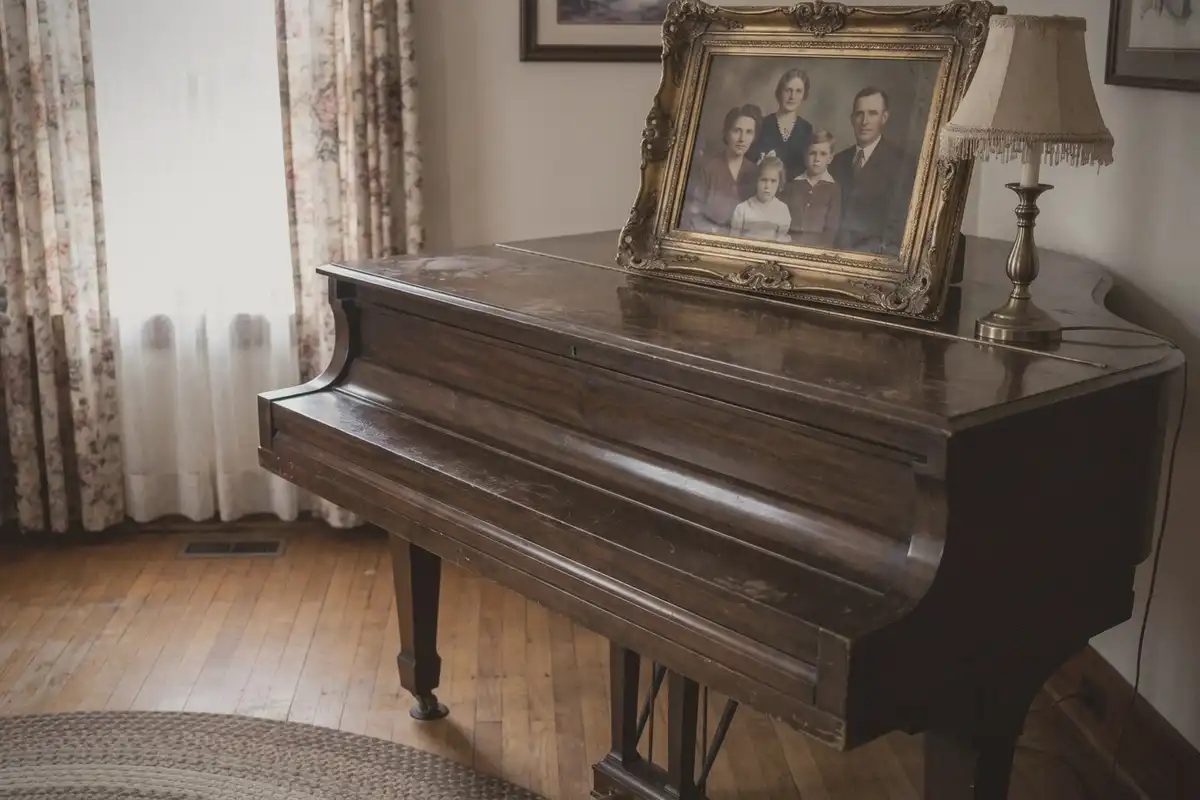
I took the next pages out of my folder, and I handed them, not to Grant, but to my daughter.
Nicole wouldn’t take them at first. “Mom, please. Not in front of people.”
“Honey, for two years this was done where nobody could see it. Today we’re going to do it where everybody can. Look at the top of the first page.”
She set down her coffee and looked. At the top of every one of those card statements is the name on the account.
Loretta Dempsey. Further down, Grant’s charges were listed under his own name, as an authorized user.
I pointed to my name. “That card is mine. It’s been mine for years. On January 5, 2024, I called my bank and added your husband so he could buy groceries. Every week since then, your groceries went on my card. Emma’s lessons. Mason’s ball fees. And a good deal of Grant’s gas and lunches besides.”
Nicole’s hands began to shake. She turned the page. Then the next one.
I handed her the checking statements. “This is my checking account. My name alone. Grant asked me to cover his truck for a few months, back in March of 2024. There are twenty payments of $612 circled on those pages. The last one went out on the 3rd of this month.”
Nicole looked up at Grant. “You told me you put Mom on our card.”
Grant shrugged. “It’s the same thing.”
I looked right at him. “No, Grant. It isn’t. Carrying someone and riding on them are not the same thing.”
The room got so quiet I could hear Mr. Pratt’s truck ticking in the driveway as the engine cooled.
Then Grant started talking fast, louder and louder. He said he handled everything in that house. Nobody knew what it cost to keep a roof over five people.
He did it all by himself, and this was the thanks he got. And now, to hear him tell it, I was turning his own wife against him.
Nicole said, very quietly, “The boat came home that Easter weekend. That first payment went out four days later.”
Grant said, “That’s different.”
Nicole didn’t answer him. She just kept looking at those pages.
Then Mason spoke up from the window. “Mom, Dad told me Grandma already said yes to selling it. He told me that last Sunday.”
Nicole looked at her son, and then at her husband, and I watched something in her face shut like a door. Not slammed. Just shut.
Mr. Pratt cleared his throat. “Son, I’ll be needing my $500 back.”
Grant said, “I don’t have it right now.”
Nicole’s head came up. “Where is it?”
“Bills.”
Then Grant turned to me, and I watched him try on a softer face. “Loretta, could you just cover it? Just this once, until payday?”
I thought about that red stop arm swinging out from the side of Bus 14, lights flashing.
I said, “No.”
Just the one word. I didn’t explain it. A stop arm doesn’t explain itself.
Mr. Pratt said, “Then you’ve got until the end of December, or I’ll see you in small claims court.” He wrote something on his clipboard. Then he nodded to his two young men, and they started rolling up their straps.
That’s when Emma stood up on the stairs. She said, “Grandma. The lid.”
Everybody turned and looked at her.
I hadn’t lifted that lid since before Vernon died. I laid both hands flat on it, and for a moment I didn’t think I could do it.
Then Mason came over from the window without being asked. He took the other side. Together we raised it, and he set the prop stick in place.
There, on the underside of the lid, in soft gray pencil, was the line I’d watched Vernon write thirty-seven years before. June 11, 1988. Paid for with Retta’s bus money.
She says play it every day. Vernon.
And under it, in a hand that wobbled like a first grader’s, was a line I had never seen.
September 2023. Thirty-five years. Every day I could.
It was always yours, Retta. Vernon.
I reached up and touched that second line with two fingers. The pencil was so light it had barely marked the wood. He must have pressed as hard as he could, and that was all he had left.
My knees went soft. Thelma was out of her chair and beside me before I knew she had moved, with one strong hand flat against my back.
He knew. That last September, lying in the hospital bed in our front room with the piano right beside him, my husband knew I might need it in writing someday. He knew I like things in writing.
Emma said, “He made me promise, Grandma. I kept it.”
“You did, baby. You kept it.”
Mr. Pratt stood there with his clipboard hanging at his side. He looked at that lid for a long moment. Then he said, quietly, “I saw that date on Tuesday, ma’am. I should have known Retta hadn’t passed years back.”
He didn’t wait for me to answer. He tucked his clipboard under his arm and walked out to his truck.
Grant’s portrait was still leaning against the wall where he’d set it that morning, and in the glass I could see his face. For one second, when he thought nobody was watching, he looked ashamed. Then he saw me see it, and it was gone.
When the truck pulled away, I closed my folder and looked at Grant and Nicole both.
I said, “Here’s how this is going to go. That piano leaves this house when I do, with movers I pay for, to a place of my own. I’ll be gone within six weeks. Grant, you’re off my accounts. All of them. Your truck is yours to pay. Mr. Pratt’s money is yours to give back, not mine. Emma, I’ll keep paying for your lessons, but I’ll pay your teacher myself.”
Then I looked at my daughter.
I said, “Nicole, I never paid you rent, because you wouldn’t take it. I want you to know I tried. And I don’t want a penny of that money back. I gave it. But nobody in this house was carrying me.”
Nicole’s face crumpled. “He told me Sunday, Mom. About the piano. I told him to talk to you first, and then I went to bed. I didn’t want to know.”
It was the truest thing my daughter had said to me in two years.
I reached over and took her hand. “I know, honey. I taught you that. Eyes front, keep driving. I’m sorry I did.”
“Mom, you don’t have to move.”
“Yes, I do.”
From that phone call at 11:40 on Thanksgiving night, Grant never charged another dime to my account. His card was declined twice at that register the next morning, and the television never left the store.
Twenty truck payments came out of my checking account, $12,240 in all. The next one never did. Grant made the December payment himself, and he has made every one since.
On my card, from January of 2024 through November of 2025, twenty-three months in all, there was $31,480.
Groceries, $19,200. The children’s things, $6,150. And $6,130 that was just Grant.
I ate at that table most nights. Call my share of the groceries a fifth. That’s $3,840.
And a room like my old one, with the power paid, goes for about $650 a month in Juniper Falls. Twenty-four months of that comes to $15,600.
Take both of those out, and I still put more than $24,000 into that household in two years. I didn’t ask for it back. What I took back was my name.
Grant paid Mr. Pratt $250 on December 5 and another $250 on December 19, out of his own paychecks. Not one dollar of it came from me.
Mr. Pratt paid his two young men for a morning’s work and drove home with an empty truck. What Grant told him to get that $500 was fraud, plain and simple, and he could have taken it to the sheriff.
He didn’t, once he was paid back, but he kept Grant’s signed receipt in his files. Thelma tells me he asks for a bill of sale now before he’ll so much as raise a lid.
I found a little one-story brick house two streets over from Thelma’s, with a front room big enough for a baby grand. I paid for it with the money from the house Vernon and I raised Nicole in. The closing was on Friday, January 9.
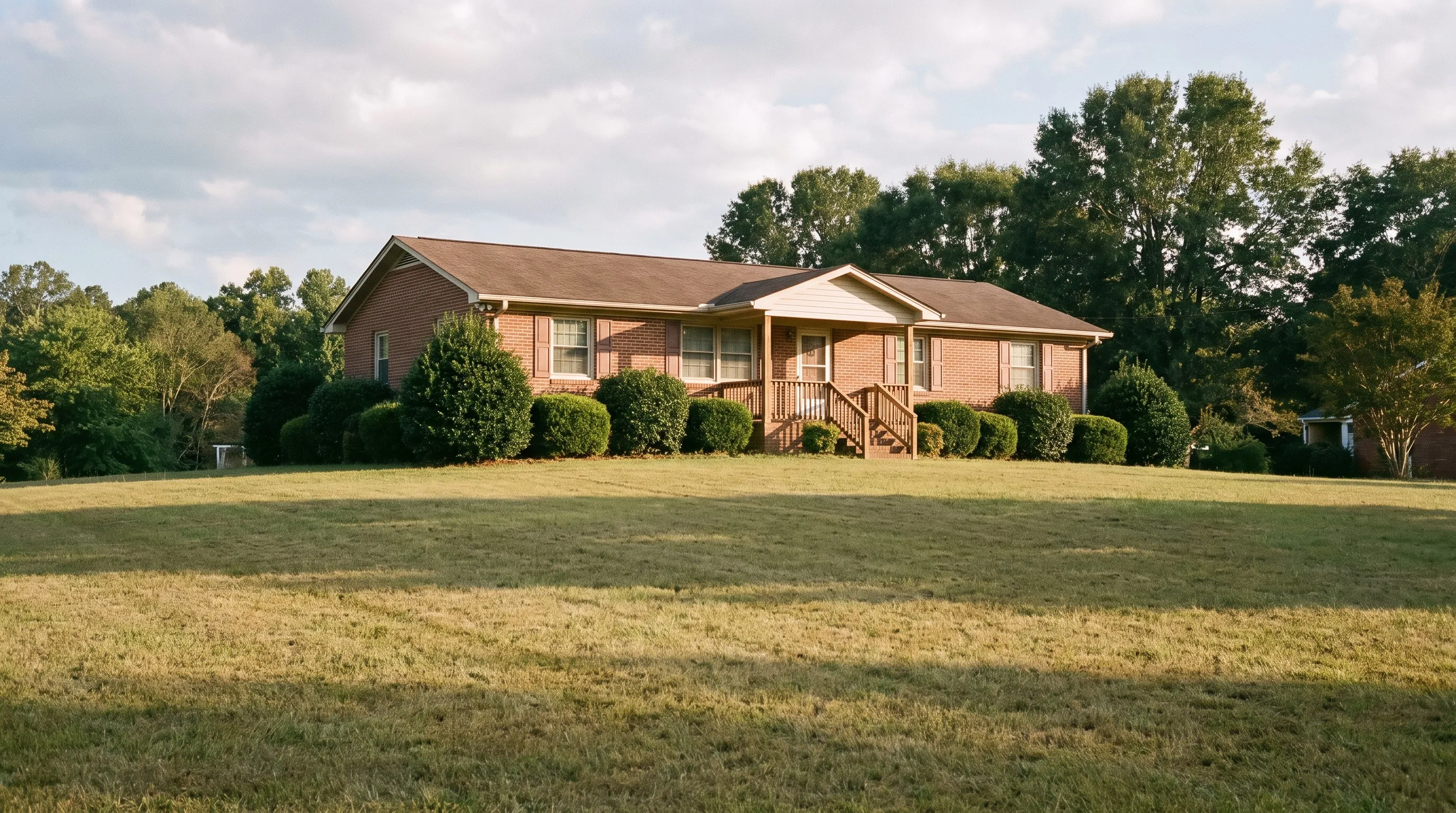
The next morning, two movers rolled Vernon’s piano out of Nicole’s front room while Nicole stood in the driveway in her robe and cried. Grant stayed inside. Emma rode over with me in the front seat.
The movers carried that piano through my own front door, and I paid them $480. Mason carried the bench in himself and set it down just so.
Nicole took over the mail in December. She sat at her kitchen table and opened every envelope and every email, and she found a loan on that boat and two credit cards in Grant’s name she had never heard of.
She opened an account in her own name for her paycheck. The boat was sold in January. She rented my old apartment over the garage to a young teacher for $650 a month, so now we all know what it’s worth.
She and Grant are seeing their pastor. I don’t know how that will turn out, and it isn’t mine to know.
On Christmas morning, before the children were up, Nicole climbed my fourteen steps with two cups of coffee. She sat down at my little table and asked me to show her how I keep a ledger.
We sat there for two hours with one pencil between us. It was the best gift she has given me in years.
Grant’s mother called Nicole to tell her I was an ungrateful old woman. Nicole, for the first time in her life, hung up on somebody.
Grant has never really apologized. Once, in the driveway, he told me he’d been going to put it all back.
That’s the nearest he has come. He drops Emma off at my house on Tuesdays after school, and he waits in the truck.
I’ve watched him in my hall mirror. He doesn’t look at the house.
Mason works at the hardware store after school now and pays for his own gas. He’s the one who came over and fixed my porch light without being asked.
My bank sends my statements on paper now, the way Wesley set it up, to my own mailbox. I open every one at my kitchen table, with a pencil in my hand.
And Emma comes every Tuesday. I pay her teacher myself, by check, and when Mason’s spring ball fees came due, I wrote that check myself, too.
The first night in my new house, she sat down at that piano and played “In the Garden,” head down, shoulders loose, humming, the way her grandfather taught her. Now she’s teaching me. At 70 years old, I can almost get through the first verse without stopping.
That first night, after she went home, I raised the lid, found a pencil in the kitchen drawer, and wrote one more line under Vernon’s two.
January 10, 2026. Home. Retta.
Thelma taught me something in the summer of 1987, and I forgot it for two years. You learn who people are by watching the mirror when they think you’re not looking. At that Thanksgiving table, I learned who my son-in-law was.
But I learned who I had been, too. A mirror isn’t only for watching other people.
Grant told me, “We’ve been carrying you for two years, Loretta. The piano is the least you owe us.” I owed him nothing. I had been carrying all of them, and I was glad to.
But carrying someone and riding on them are not the same thing, and it’s all right to say so out loud.
And when the time comes, put out your stop arm. You don’t have to explain it.
That’s my story. One piano, one phone call, one steady no.
This is a work of fiction. Names, characters and events are invented.