The Paper She Slid Across the Table — Part 3
Heather's phone lies face up on the kitchen table like a card she's about to play. Beverly listens to the price, then asks one quiet question.
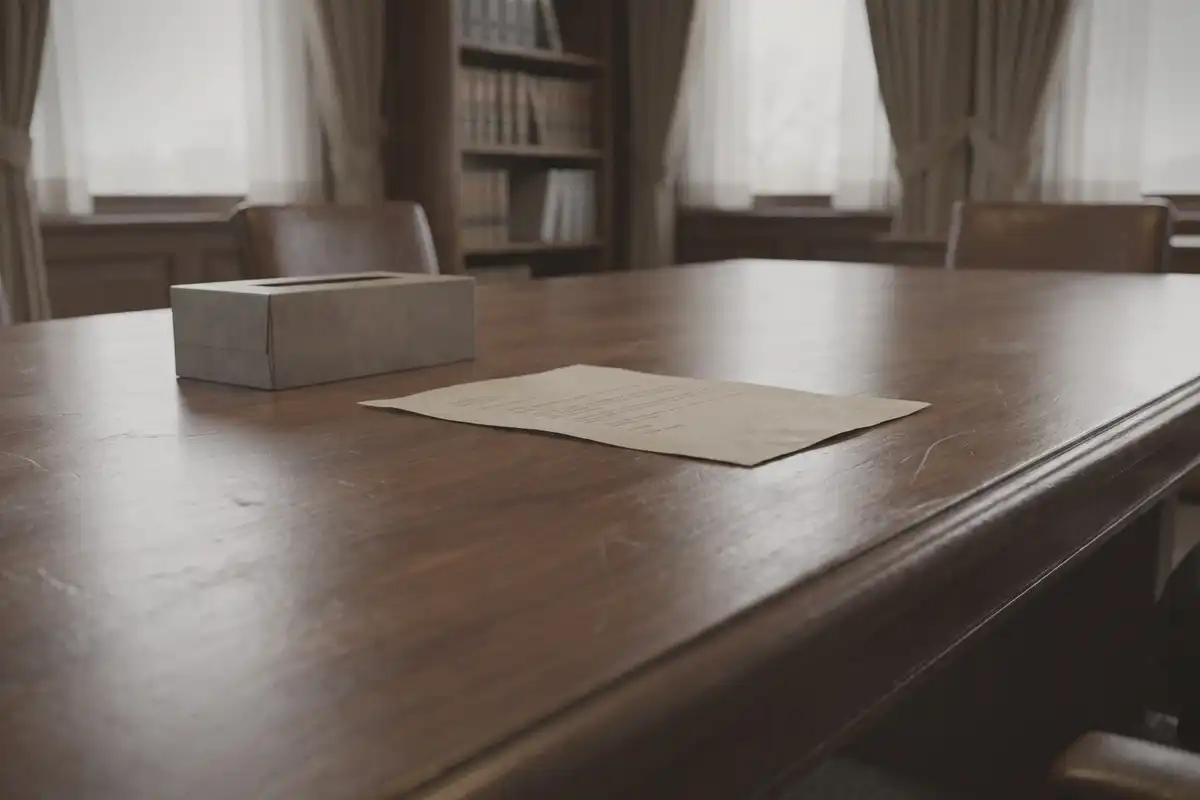
They sat at my kitchen table at 11:00 in the morning, and Heather laid her phone face up between us like a card she was about to play. She said, “I have a buyer at $235,000. Cash. He’s ready. The bank is being difficult about my house, and I need this, Mom.”
That was at least $50,000 under what the cabin would bring on the open market.
I looked at my daughter. “Your house goes to sheriff’s sale on June 11.”
She went white. “You looked me up?”
“It’s public, Heather. Anybody can look.”
Scott looked from her to me. He hadn’t known the date. I could see that.
Heather recovered fast. She always does. She leaned in and said it again, slowly, like I was hard of hearing.
“Daddy changed his mind, Mom. It’s notarized. It’s done.”
Then she said the part she had come to say. “If you won’t sign, Scott and I will go to probate court and have you removed as trustee. You’re grieving. You’re not thinking straight. Scott agrees with me.”
Scott said, “Mom, maybe it’s just too much for you right now. And Tamara says she was right there when he signed it. Why would Tamara lie?”
I looked at my son. “Scott, why are you here?”
He started to say something about his dad. Then he stopped, and the rest came out.
The spring before, he had lent his sister $6,000. Now she had promised to pay him back out of the cabin money.
I sat back in my chair. “So you’re not here for your father. You’re here for $6,000.”
He went red to the ears and looked at the table.
I turned to Heather, and I gave her the second chance I had promised myself I would give her. “Heather, look at me. Not at your phone. At me. Did your father sign that paper?”
She held my eyes. “Yes.”
I stood up. “Then we’re done for today.”
After they left, I wrote the whole conversation in the notebook while it was fresh.
The next afternoon, Avery knocked on my back door. She had just come home from school for the summer, and her eyes were swollen.
“Grandma, Mom says the cabin’s being sold. She says Grandpa changed his mind, and I’ll get something from it later.” She wiped her nose on her sleeve like she was five years old again. “But Grandpa told me last summer, right on the dock, that the cabin was going to be mine and the boys’ someday. He said I had to teach them to fish, because their dad can’t.”
That made us both laugh a little, right through it.
Then she looked right at me. “Did he change his mind?”
“No, honey. He didn’t. I can’t tell you all of it yet. I’m asking you to trust me for three weeks.”
She thought about it. Then she said, “The dock goes in on Memorial Day weekend. I’ll be there.”
On Monday morning at 10:00, I sat in Mr. Ingram’s office again, this time alone.
I told him everything, and he took notes on a yellow pad without interrupting me once.
Then he said, “Let me tell you what I know and what I don’t. The word ‘only’ in your trust is doing a lot of work, and I’m glad it’s there. Anybody can file a petition to remove a trustee. A judge would want a reason. Following the trust isn’t one, and grief isn’t one either. But I can’t promise you what any judge would do.”
About the notary, he was just as careful. “If the chart shows what you say it shows, that’s a false notarization. In Ohio, the Secretary of State commissions notaries, and that office takes complaints.”
About my daughter, he took off his glasses. “What you do about Heather is your decision, Beverly, not mine. If you decide to go to the police, I’ll go with you. But I’d wait until the chart is in your hands. I don’t want you walking in with a mother’s memory. I want you walking in with documents.”
On Thursday, the chart came. A stack as thick as a phone book, certified by the hospital. I turned to the date on Heather’s paper.
The nurses in the intensive care unit had checked on Gerald every hour that day and written it down. Each entry said the same thing. Deeply sedated.
On the ventilator. No response.
Not one hour when he could have held a pen.
On Friday, I asked myself a question I should have asked the first day. If somebody wanted to copy Gerald’s signature, where would they find a good clean one?
And I thought of the check.
I pulled up that check on our bank’s website, because it came out of our account. On the back, in Heather’s handwriting, it said “for mobile deposit only.”
She had deposited it with her phone, so she’d had a picture of it all along. On the front, June of 2023. $15,000.
“Loan. Pay back when you can.” And Gerald’s signature, with a little skip in the G where his pen had gone dry for half a letter.
I printed it and enlarged it on my copier until it matched the size of the signature on Heather’s paper, and I taped it to the kitchen window. Then I laid my copy of Heather’s paper on top of it and let the afternoon sun come through both sheets.
They matched, loop for loop and slant for slant. The long tail on the L. And that little skip in the G, in exactly the same place.
Here’s something thirty-eight years of comparing signatures teaches you. Nobody signs his name the same way twice.
A real signature always wanders a little. When two of them match like twins, one of them is a copy.
A signature is only as honest as the hand that held the pen. Gerald’s hand had never been anywhere near that paper. Somebody had traced him.
I stood at that window for a long time. Then I called Mr. Ingram and told him, and I told him too that I am not a handwriting expert.
He said that if it ever came to that, one could be hired. I gave him the original notebook and the certified chart to keep in his vault, and I kept copies.
On Monday, May 11, I mailed a complaint to the Secretary of State’s office by certified mail. I sent copies of the paper, the chart pages for that Sunday, and my notebook page. I didn’t file it the day after the reading, and here’s why.
A complaint without documents is just a grudge. I wanted mine to be a file.
On Tuesday, I called the hospital and left a message for Edna. She called me back that evening. I told her what had happened, and I asked if she would come up to the lake on Saturday, the 23rd, and tell my family what she had told me in that waiting room.
Edna didn’t hesitate. “Honey, I heard about that lake for four nights straight. I’ll bring a pie.”
By the middle of May, Nora let me know the cash buyer had walked away and her file was shut. Nobody could sell that cabin without me, so there was no race for me to win. The only clock ticking was Heather’s.
On Sunday, the 17th, I sent the family the same text we send every year. “Dock goes in Saturday at 10:00, same as always.”
Heather wrote back that night. “I’ll be there. I’m bringing Tamara. We’ll settle this in front of everybody.”
If I had shown Heather those papers alone, she would have told Scott I was twisting things, and she’d have had two weeks to line up her story with Tamara. I wanted everybody who had heard her version to hear the truth at the same time.
I wanted Tamara sitting across from me, not on the phone with Heather. And I wanted Edna there, the one person alive who watched my husband sign his real last letter.
Saturday, May 23, came up cool and bright. Avery rode up to the lake with me at 8:00.
The water was still cold enough to make your ankles ache, and a thin mist was lying on it. The dock sections were stacked on the shore, right where Gerald and Scott had left them in October.
I had a folder with me, and each paper in it was a copy. The original trust and Gerald’s original letter were in my safe deposit box at the bank. The certified chart and my notebook were in Mr. Ingram’s vault.
I’ve watched people learn this the hard way. Never carry your only copy of anything into an argument.
Scott pulled in at 9:45, by himself. He said, “I left the boys home. I didn’t want them to see this.”
He couldn’t look at me. He went straight down to the dock sections and started checking bolts that didn’t need checking.
Edna came at 10:15 in a little blue car, with a rhubarb pie on the passenger seat. She stood at the top of the porch steps and looked out at the water for a long moment.
Then she said, “He undersold it.” That was the first time I had laughed all week.
Heather and Tamara came at 10:30, in Tamara’s car. Heather had a folder of her own.
Tamara stayed a step behind her and wouldn’t meet my eyes. That girl had eaten a hundred of my hot dogs on that very porch.
We sat at the picnic table on the porch Gerald built. Six of us. Me, Avery, Scott, Edna, Heather, and Tamara.
Heather went first. I knew she would. She opened her folder and slid a paper across the table, the same way she had in April.
It was a deed. She had printed the form off the internet and filled it in herself. It had my name as trustee, her name as the person receiving the cabin, and a blank line waiting for my signature.
She looked up at me. “Sign this, Mom, and we can put the dock in like a family. The bank takes my house in nineteen days. Please.”
I’ll admit that “please” nearly got me. She’s my girl. But I had a folder too.
I said, “I brought some papers of my own. They’re all copies. The originals are with Mr. Ingram and in my safe deposit box.” And I laid them out on the table in order, the way I used to lay out a closing.
The first one was the trust. I found the page and turned it so everybody could see. “This trust can be changed only one way. In writing, signed by both of us, and delivered to the trustee. Heather, I’m the trustee. Nobody delivered anything to me while your father was alive, and I never signed anything. Your father couldn’t change this trust by himself on the best day of his life. And since the day he died, nobody can change the cabin at all. Not you. Not me. If I signed your deed, I’d be stealing from Avery and from Scott’s boys.”
Heather waved that away. “That’s a technicality.”
“In my line of work, honey, that’s called the law.”
Then I gave her the third chance. The last one. “I’ll ask you once more, in front of everybody. Did your father sign that paper?”
“Yes. He did.”
So I turned to my son. “Scott, you sat with your father on Saturday, February 14. That’s the day before the date on your sister’s paper. Tell her what he looked like.”
Scott’s mouth worked for a second. When the words came, they came very quietly. “He had the tube in. He never opened his eyes. I held his hand for three hours, and he never squeezed back.”
I put the next copy on the table. “This is his chart for the next day. The 15th. Certified by the hospital. The nurses checked on him every hour, and every hour says the same thing. Deeply sedated. On the ventilator. No response.”
Then my notebook page. “Heather came 2:10. Left 2:30.”
I turned back to Heather. “I was in that room, honey. You came alone. You stayed twenty minutes, and he never opened his eyes. So tell me. When did he sign?”