The Piano Was Not His to Sell — Part 3
What did Grant tell the piano dealer about his mother-in-law? A grandson brings a printout, a granddaughter breaks a promise, and on Saturday a truck backs in.
Twenty payments. $12,240.
The very first one went out on Wednesday, April 3, 2024. I sat there with my pencil and counted back. Easter had been the Sunday before.
That was the weekend the boat came home. So two days after Grant told me his commissions were down, he brought home a boat.
Both of those things couldn’t be true. One of them was a lie, and it wasn’t the boat.
At 11:15, I looked up Pratt’s Piano Exchange on my phone and called. A man answered on the third ring.
I sat up straight behind the wheel. “Mr. Pratt, my name is Loretta Dempsey. I believe you’ve arranged to pick up a walnut baby grand in Juniper Falls tomorrow morning. That piano belongs to me, and it isn’t for sale.”
He was quiet for a second. “Ma’am, your son-in-law texted me before daylight. He said you might call. He said you get confused about what’s yours.”
“I’m sure he did.”
Mr. Pratt said, “I texted him yesterday afternoon to confirm Saturday, and he wrote right back. I’ve got a receipt with his signature on it. I paid him $500 cash on Tuesday, about 12:30, when I came out to look at it.”
Tuesday. 12:30 on Tuesday, while I sat in a diner booth with Thelma.
That was why the portrait had moved. And yesterday afternoon, between the green beans and the dressing, that must have been the message that made Grant smile.
Then Mr. Pratt brought up one more thing. “And ma’am, there’s some pencil writing inside that lid. I asked him about it. He told me the Retta in it was his wife’s grandmother, passed years back.”
“Mr. Pratt, I’m Retta. And I haven’t passed.”
The line went quiet for a good while.
Then he said, “Ma’am, I’m not in the business of hauling off anything that isn’t clean. If you’ve got paper, I’ll look at it when I get there.”
“I’ll be sitting beside that piano at 10:00.”
A little before noon, I called the sheriff’s office on the number that isn’t for emergencies. I didn’t want anybody arrested. I wanted to know what to do if two men tried to roll my piano out the door over my objection.
The woman who answered was kind and careful. “Keep your proof of ownership in your hand, ma’am, and stay calm. If somebody tries to take your property after you’ve told them no, you call us, and we’ll send a deputy out. I can’t tell you how it’ll go from there.”
That was all I needed to hear.
At 1:00, Thelma climbed my fourteen steps, slower than she used to, and sat down at my little table. I told her everything. She listened the way she used to listen to a driver explain a dented fender, with her hands folded and her eyebrows up.
When I said the name Pratt, she snorted. “He bought the old upright out of our church fellowship hall for a few hundred dollars and sold it that spring for a whole lot more. He buys from families in a hurry, Loretta. That’s his whole business.”
Then she tapped the stack of statements. “Two years. You handed that boy your mirror and quit looking.”
“I know it.”
“Well. You’re looking now.”
Then she asked me why I didn’t just send Mr. Pratt my papers that afternoon and be done with it. It was a fair question. If I settled it over the phone, Nicole would hear the whole thing from Grant, the way she had heard everything for two years.
I wanted my daughter in that room when the paper came out. I wanted her to see it with her own eyes, in daylight, with a stranger standing there who had no reason on earth to take my side.
Thelma said, “Then I’m coming. What time?”
“9:30.”
She said, “I’ll be there at twenty after.”
A little after 3:00, my phone buzzed. It was a text from Grant. It said, “Pratt will be here at 10:00. Don’t embarrass yourself in front of the kids. Everybody agrees you’re not thinking straight.”
I looked at that word for a while. Everybody. His mother and himself.
That was everybody. I didn’t answer it. I saved it.
At 4:00, there was a soft knock. It was Mason, alone this time. He stood in my doorway with his hands jammed in his jacket pockets.
He stared down at his sneakers. “Grandma, I’m sorry I laughed. I don’t know why I did that.”
“I know, honey. Come sit down.”
He told me about the store. The card was declined twice. His dad called the number on the back.
Then, out in the parking lot, Grant typed a message to Mr. Pratt, saying the words out loud as he went. Mason said, “He said you get confused, and you might call, and not to listen to you.”
Then Mason took out his phone. “A buddy of mine sent me this last Sunday. He asked if it was your piano. Dad told me you’d already said yes. I believed him.”
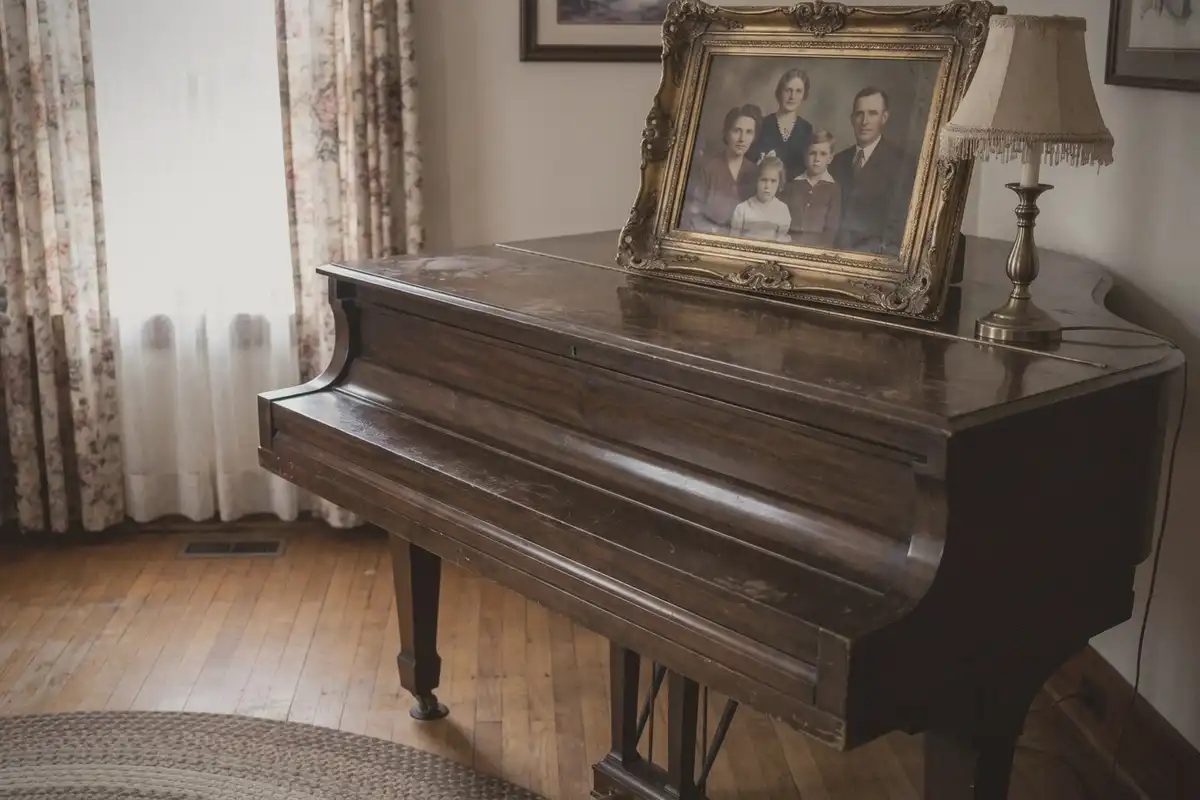
It was a picture of a listing on one of those online buy-and-sell pages. There was my piano, with Grant’s portrait sitting on the lid.
Underneath, it said, “Estate piano. Walnut baby grand. Owner deceased. $4,500 firm. Must go by the end of the month.” It had gone up on November 20, a week before Thanksgiving.
Owner deceased. And there I sat, drinking my coffee.
I asked Mason to send it to my phone. He did better than that. He went back to the house, printed it out, and brought it up to me.
At 7:30, Nicole came up. She didn’t sit down. She stood just inside the door with her arms crossed, the way she used to stand at 15 when somebody else had sent her up to tell me something.
She got right to it. “Mom, Grant says you froze our card. He says he put you on it so you’d have something for groceries, and now you’ve gone and messed it all up. The children’s things are on that card. Why would you do this over a piano?”
“Nicole, whose name do you think is on that account?”
“Grant’s. He said he added you.”
“Ask him to show you one statement. Just one. Tonight.”
She looked at me for a long time. “Mom, I can’t be in the middle of this.”
“Honey, you’re not in the middle. You’re just standing where you can’t see.”
She went back down the steps. I watched her from my window. At the bottom, she stood for a while with her hand on the rail.
Then she went inside, and the kitchen light went off.
At 9:00, Emma knocked. She was in her pajamas with a sweatshirt pulled over them, and her eyes were swollen.
She had the cuffs of that sweatshirt balled up in her fists. “Grandma, I have to tell you something. I promised Grandpa.”
She sat on the edge of my bed and told me. In September of 2023, a few weeks before he died, on an afternoon I’d gone to the drugstore, Vernon asked her to help him raise the big lid.
He couldn’t lift it anymore. She held it up while he sat on the edge of his hospital bed, right beside the piano, and reached over and wrote something with his pencil, right under the line from 1988.
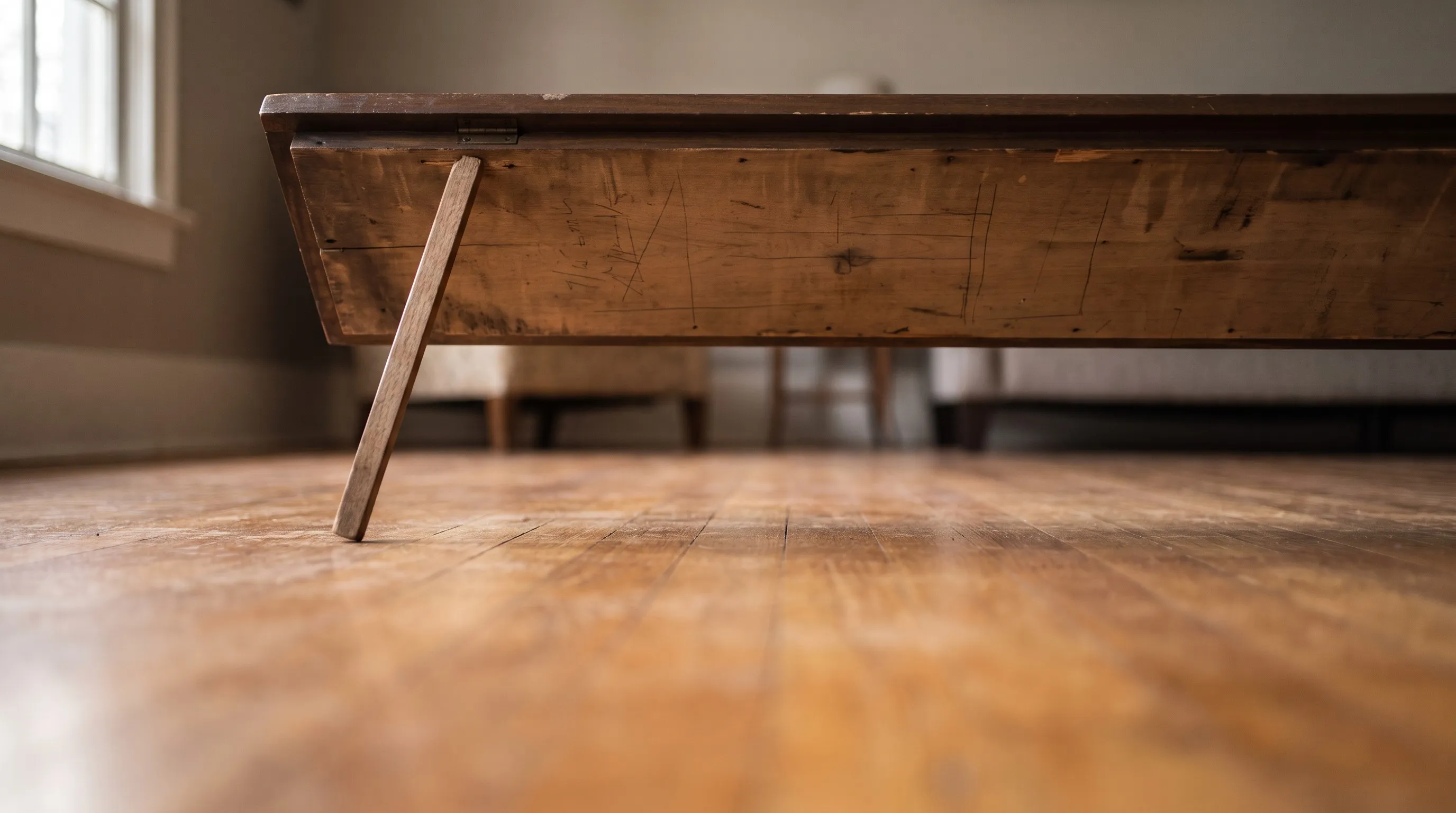
Emma said, “He made me promise not to tell you what it says. He said you’d want to see it in his handwriting. He said, when Grandma needs it, tell her to look.” She wiped her nose on her sleeve. “I think you need it.”
I held that child for a long time.
She asked if we could go look right then. I told her no. The piano was in her daddy’s front room, it was 9:00 at night, and I was not about to go creeping through my daughter’s house in the dark.
Tomorrow, I told her. In daylight, with everybody there.
After she went back to the house, I got out a manila folder and put everything in order, the way I used to line up my paperwork before a bus inspection. The copy of that 1988 bill of sale on top.
The copy of Vernon’s will. The picture of the listing. The card statements, with a paper clip on the page that showed whose name was on the account.
The checking statements, with all twenty truck payments circled in pencil.
Every piece of paper in that folder was a copy. The bill of sale was locked in my box at the bank.
Vernon’s will was on file at the courthouse. And the bank could print those statements again any day of the week.
Then I laid out my church dress, set my alarm, and prayed. Thelma used to tell every new driver the same thing.
A driver who yells loses the bus. Calm is how you keep it.
Thelma pulled into the driveway at 9:20, just like she said. She wore her good wool coat and carried her big black pocketbook, and she climbed my steps one at a time.
At 9:45, the two of us walked across the yard and in through the back door. I had a key to that house. I knocked anyway.
Everybody was in the front room. Grant had taken his portrait and the lamp off the piano and leaned them against the wall. There was a stack of moving blankets by the front door.
Nicole sat on the arm of the couch with a cup of coffee she wasn’t drinking. Mason stood by the window. Emma sat on the stairs with her knees pulled up to her chin.
Grant looked at Thelma, then at me. “You brought a witness? Really?”
“It’s 9:45, Grant. You can still call him.”
Grant pointed at the bench. “Sit down, Loretta.”
So I sat. I sat down on Vernon’s piano bench with my folder on my knees, and Thelma took the chair by the door and laid her wool coat over the back of it.
At 10:00 on the dot, a white box truck backed into the driveway. Mr. Pratt climbed down. He was a heavy man in his sixties with reading glasses pushed up on his head and a clipboard under his arm.
Two young men came up the walk behind him with a padded board and a roll of straps.
Grant met him at the door with a big handshake, and he got in the first word, the way he always does.
He said, “Mr. Pratt, like I told you, my mother-in-law gets a little confused about what’s hers. She’s been through a lot. This piano belongs to the family, and I’m handling it for the family.”
Mr. Pratt looked past him, at me on the bench.
I stood up, opened my folder, and handed him the first page. “Good morning, Mr. Pratt. I’m Loretta Dempsey. This is a copy of the bill of sale from June of 1988. You’ll see both names on it, my husband’s and mine, and the serial number, and the words paid in full. The original is locked in my safe deposit box at the bank. And this is a copy of my husband’s will, leaving everything he owned to me. The original is on file at the courthouse.”
Mr. Pratt pulled his glasses down onto his nose. He studied that page for a long time. Then he flipped back through his clipboard to the notes he’d made on Tuesday.
He ran his finger along the serial number he’d copied down that day, then along the one on my bill of sale. He did it twice.
He straightened up and turned to Grant. “Son, this piano isn’t yours. I can’t buy it from you.”
Grant threw up his hands. “It’s been sitting in my house for two years!”
Mr. Pratt said, “Where a thing sits doesn’t make it yours.”
From her chair by the door, Thelma said, “My coat’s been sitting in your house since 9:45, Grant. It’s still my coat.”
Grant’s face went red, then white. He turned to me, and he said it again, right in front of all of them.
Word for word. “We’ve been carrying you for two years, Loretta. The piano is the least you owe us.”
“All right, Grant. Let’s talk about carrying.”